Guides › Taiwan vs. mainland Chinese
Taiwanese Mandarin vs. Mainland Chinese: what changes and which to learn
Maca Laoshi, Mandarin Chinese teacher
Updated October 25, 2026 · 6 min read
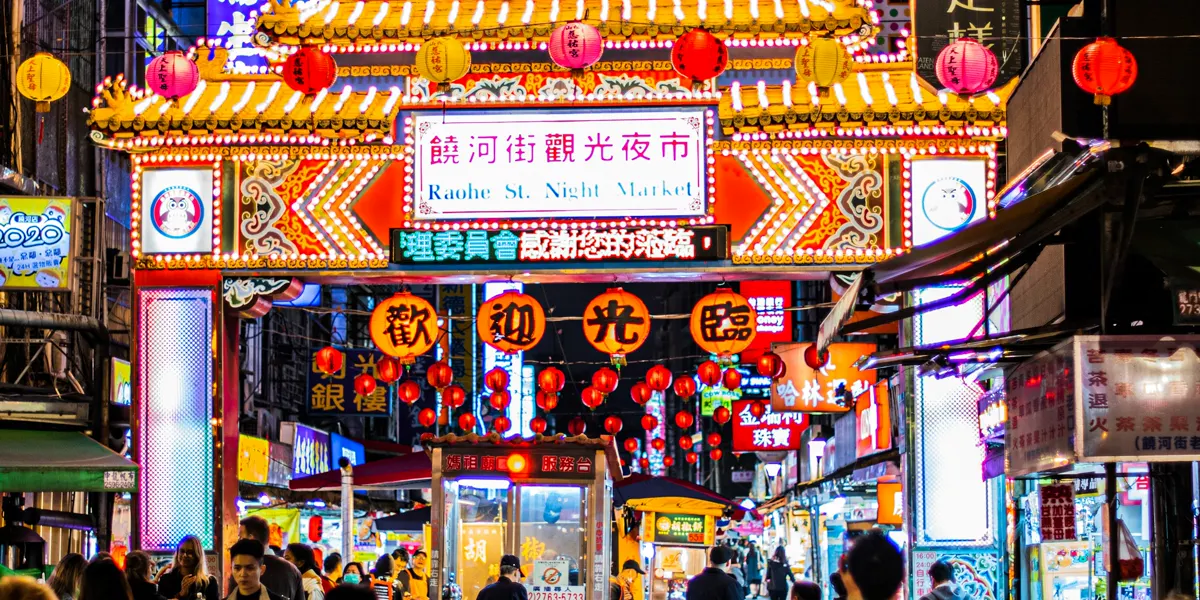
Taiwan speaks the same standard Mandarin, with its own accent and vocabulary, and writes it with traditional characters; pronunciation is taught with zhuyin (bopomofo) rather than pinyin. The two varieties understand each other, but some words differ (软件 versus 軟體 for "software"), some readings differ, and so does the exam (TOCFL in Taiwan, HSK in mainland China). Macalaoshi teaches mainland standard with simplified characters and pinyin, and what you learn also helps you get by in Taiwan.
What is spoken in Taiwan
The language taught in schools and used in the media is Taiwanese Mandarin, called 國語 (guóyǔ, "national language") or 華語 (huáyǔ, "Chinese language"). It is regulated by Taiwan's Ministry of Education.
But Taiwan is not monolingual. Taiwanese Hokkien (台語) is spoken by about 70% of the population according to Wikipedia, and Hakka and the Indigenous (Formosan) languages are spoken too. Hokkien has strongly influenced the island's Mandarin. These are separate languages from Mandarin, not mutually intelligible dialects: the same situation we described in the guides on what Mandarin is and on Cantonese.
Writing: traditional characters and zhuyin
Taiwan uses traditional characters; mainland China uses simplified ones. The details of that difference are in traditional vs. simplified Chinese, so here only the essentials: it is not a different language, just a different way of writing many of the same characters.
What is specific to Taiwan is zhuyin, or bopomofo: a system of 37 symbols and five tone marks that is the main method of teaching pronunciation in school and one of the most popular ways to type. Mainland China adopted pinyin in 1958; Taiwan made pinyin its official romanization in 2009, but its use is more uneven and mostly seen on signs.
| Word | Characters (Taiwan) | Zhuyin | Pinyin |
|---|---|---|---|
| Taiwan | 台灣 | ㄊㄞˊ ㄨㄢ | Táiwān |
Vocabulary: same thing, different word
This is the difference you notice most when traveling or watching shows. Every pair in the table is confirmed in the cited sources.
| Meaning | Taiwan | Mainland China |
|---|---|---|
| Software | 軟體 ruǎntǐ | 软件 ruǎnjiàn |
| Internet | 網路 wǎnglù | 网络 wǎngluò |
| Bicycle | 腳踏車 jiǎotàchē | 自行车 zìxíngchē |
| Taxi | 計程車 jìchéngchē | 出租车 chūzūchē |
| Video | 影片 yǐngpiàn | 视频 shìpín |
| Potato | 馬鈴薯 mǎlíngshǔ | 土豆 tǔdòu |
| Boxed lunch (bento) | 便當 biàndāng | 盒饭 héfàn |
| To print | 列印 lièyìn | 打印 dǎyìn |
False friends between the two varieties
More dangerous is when the word is the same and the meaning changes:
| Word | In Taiwan | In mainland China |
|---|---|---|
| 土豆 tǔdòu | peanut | potato |
| 愛人 àirén | lover | spouse |
| 影集 yǐngjí | TV series | photo album |
The 土豆 pair confuses people most, and the sources we checked do not agree on every nuance of usage, so when in doubt ask from context. A list this short does not cover everything: each region also has words that dictionaries do not record.
 Test your Chinese
Improve your Chinese with our app, Macalaoshi Flashcards: 1,300+ words and characters to practice like this.
See the appPronunciation: accent and readings
The accent differences are real, but they do not stop people understanding each other. The most cited:
- Less erhua. The suffix 儿 (-r) is very common in Beijing speech and almost unused in Taiwan: 一点儿 yìdiǎnr versus 一點 yìdiǎn.
- Retroflexes get flattened. In everyday speech of many Taiwanese, zh, ch and sh sound like z, c and s (according to Wikipedia they merge in most contexts). So 知道 zhīdào can sound like "zīdào".
- Less neutral tone. In words like 但是 dànshì or 先生 xiānshēng, the last syllable usually keeps its tone.
And some characters have a different reading in the Taiwan standard:
| Word | Mainland China | Taiwan |
|---|---|---|
| 垃圾 (garbage) | lājī | lèsè |
| 和 (and, as a conjunction) | hé | hàn |
| 暴露 (to expose) | bàolù | pùlù |
If you learn from mainland audio and arrive in Taiwan, expect some words to sound different for the first few days. See the pronunciation guide for the sounds both share.
Exams: TOCFL versus HSK
The TOCFL (Test of Chinese as a Foreign Language) is run by SC-TOP, a committee under Taiwan's Ministry of Education. It has eight levels in four bands: Novice (two levels) and bands A, B and C (two levels each). It is not offered in mainland China, Hong Kong or Macao, where the HSK is used. Certificates can support applications for the Taiwan Scholarship and admission to Taiwanese universities.
The HSK, in contrast, is the exam used in mainland China and is written in simplified characters. To see what the first level asks for, look at the new HSK 1 list, and to choose a target, which HSK level you need.
According to several sources, the TOCFL can be taken with a traditional or a simplified character version, but those sources are old: confirm on the official exam site before registering.
Can they understand each other?
Yes. According to Wikipedia, Taiwanese Mandarin and mainland standard are mutually intelligible, though they differ in vocabulary, phonology and grammar. Everyday conversation works; the stumbling blocks are the region-specific words (software, taxi, potato) and writing, because someone who learned traditional has to recognize simplified and vice versa.
Which should you learn?
| Your goal | What fits |
|---|---|
| Study or work in Taiwan | Traditional characters, zhuyin and Taiwan vocabulary; TOCFL exam |
| Study or work in mainland China | Simplified characters, pinyin and HSK |
| Travel, shows, general conversation | Either: the base (tones, grammar, shared vocabulary) is the same |
| You do not know yet | Start with pinyin and simplified, because that is what the HSK and Macalaoshi teach, and add traditional when you need it |
Learning both writing systems is possible: many characters are identical in both and many of those that differ can be recognized from context. More in the traditional and simplified guide.
How Macalaoshi does it
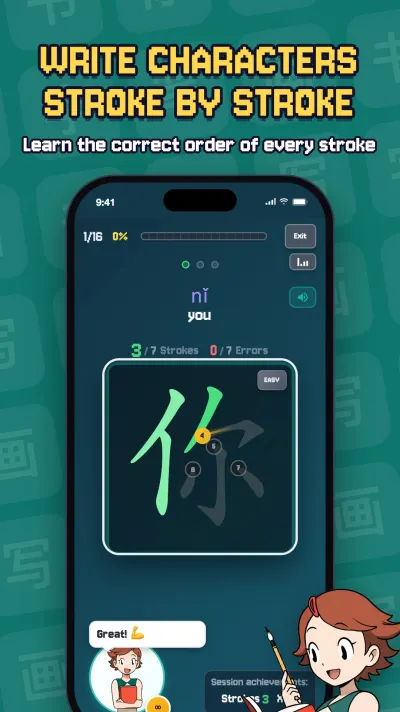
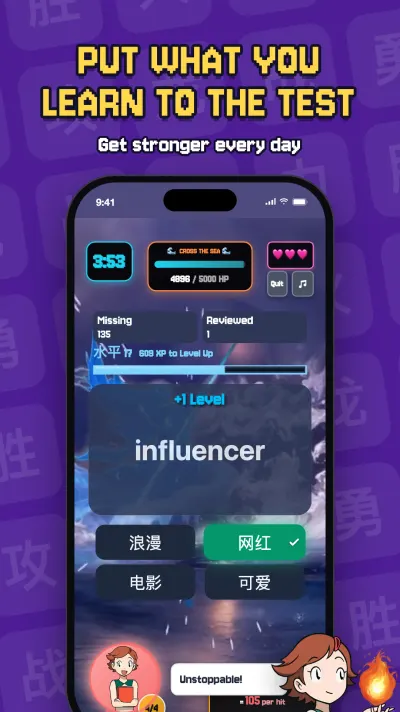
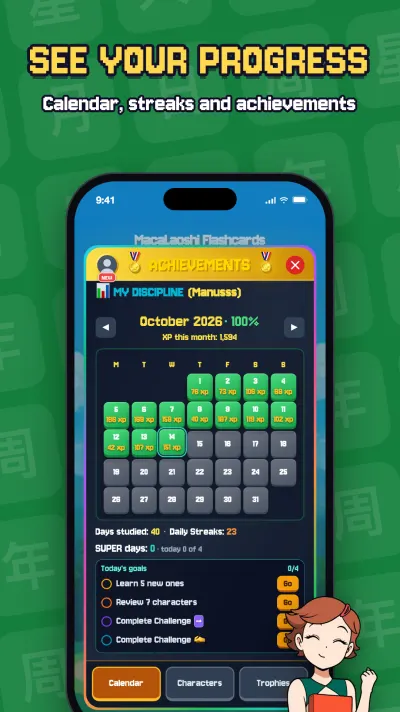
Macalaoshi teaches mainland standard Chinese with simplified characters and pinyin, and does not cover traditional characters or zhuyin. You collect characters and words from HSK 1 to 4 (more than 1300 in all) inside a challenge with bosses: every character you get right goes up a level and what you miss comes back for you to review. The base you learn (tones, grammar, much of the vocabulary) also helps you get by in Taiwan; the local specifics you add afterwards.
Exam details can change. If you are preparing for the TOCFL or the HSK, confirm the current conditions on the official sites.
Improve your Chinese with Macalaoshi Flashcards
Maca Laoshi's app for learning characters, with audio, pinyin and stroke-by-stroke writing.
- 1,300+words and characters
- HSK 1–4by level
- Freeto start

Learn with our songs
We made them for Macalaoshi. Singing along is a fun way to practice pronunciation and review vocabulary.
The Lighthouse of My Heart 我心里灯塔

Study With You 跟你一起学
Frequently asked questions
What language is spoken in Taiwan?
The de facto national language is Taiwanese Mandarin, called 國語 (guóyǔ) or 華語 (huáyǔ). Taiwanese Hokkien, Hakka and Indigenous languages are also spoken.
Are Taiwanese and mainland Chinese the same language?
They are the same standard Mandarin with differences in vocabulary, pronunciation and, to a lesser degree, grammar. According to Wikipedia they are mutually intelligible.
Does Taiwan use simplified characters?
No, Taiwan uses traditional characters. To teach pronunciation in school it uses zhuyin (bopomofo) instead of pinyin.
Which exam do people take in Taiwan?
The TOCFL, run by SC-TOP under Taiwan's Ministry of Education. The HSK is the exam of mainland China.
Does what I learn with pinyin and simplified characters help in Taiwan?
Largely yes: tones, grammar and a lot of vocabulary are shared. You would need to add traditional characters and some Taiwan-specific words.
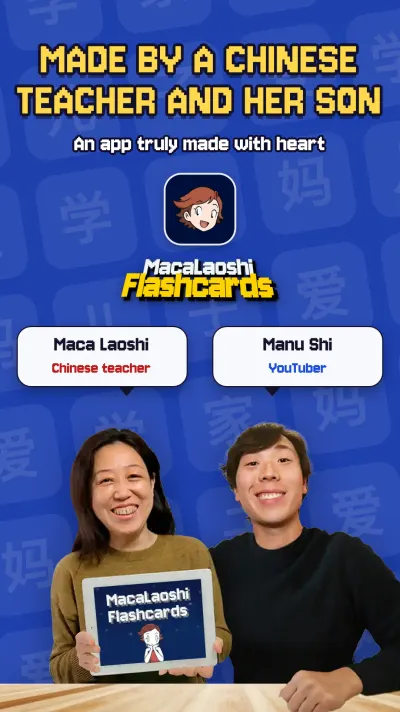
Maca Laoshi, born in Beijing, has taught Mandarin Chinese for more than 22 years and has had over 1,500 students. Together with her son Manu Shi, who has more than 93,000 subscribers on YouTube, she created Macalaoshi, an app that challenges you to push yourself one character at a time. Few Chinese teachers can show both: their own app and a channel like that.
Sources
- Wikipedia: Taiwanese Mandarin (guoyu/huayu), regulated by the Ministry of Education; mutually intelligible with putonghua; little erhua; zh/ch/sh tend to merge with z/c/s; different readings (和 hàn, 垃圾 lèsè, 暴露 pùlù); vocabulary (軟體, 網路, 便當, 列印, 土豆, 愛人); traditional characters and bopomofo.
- Wikipedia: Mandarin is the de facto national language; Taiwanese Hokkien is spoken by about 70% of the population; Hakka and Formosan (Indigenous) languages are also spoken.
- LTL Taiwan: vocabulary pairs 腳踏車/自行车, 計程車/出租车, 影片/视频, 馬鈴薯/土豆; erhua almost absent; retroflexes often flattened.
- Wikipedia: zhuyin has 37 symbols and five tone marks; it is the main method of teaching Mandarin pronunciation in Taiwan.
- Wikipedia: Taiwan adopted Hanyu Pinyin as its official romanization in 2009, though use is uneven; Taiwan mostly uses bopomofo for typing.
- Wikipedia: TOCFL is run by SC-TOP under Taiwan's Ministry of Education; eight levels in four bands; not offered in mainland China, Hong Kong or Macao, where the HSK is used.
- MDBG (CC-CEDICT): 爱人 = spouse (outside China: lover), 土豆 = potato, 软件, 网络, 视频, 出租车, 自行车.
This guide in other languages: Español · Português · Français · Deutsch · Italiano · 日本語 · 한국어