Guides › Mandarin vs Cantonese
Mandarin vs Cantonese: the differences and which one to learn
Maca Laoshi, Mandarin Chinese teacher
Updated October 20, 2026 · 8 min read

Mandarin and Cantonese are two different Chinese languages: they share much of their writing, but their speakers can't understand each other when they talk. Mandarin is the common language of China and Taiwan, and one of Singapore's official languages; in 2025, 87.72% of China's population could speak it, according to its Ministry of Education. Cantonese has about 85 million native speakers, mainly in Guangdong, Guangxi, Hong Kong and Macau. For almost everyone, Mandarin is the place to start; Cantonese is worth it if your family speaks it, if you're going to live in Hong Kong or if you love its movies and music.
What is each one?
When people say “Chinese”, they almost always mean Standard Mandarin, which in China is called 普通话 pǔtōnghuà, “common language”: the law makes it the country's common language and the basic language of schools. Cantonese, in Chinese 粤语 Yuèyǔ or 广东话 Guǎngdōnghuà, is a different Sinitic language. It's sometimes called a “dialect”, but Brigham Young University compares the distance between the two to the distance between French and Romanian.
Where is each one spoken?
| Where | What's spoken | Details |
|---|---|---|
| Mainland China | Mandarin | The common language by law. |
| Guangdong and Guangxi | Cantonese (and Mandarin) | As in the rest of the country, schools teach in Mandarin. |
| Hong Kong and Macau | Cantonese | In Hong Kong, 88.2% usually spoke it in 2021. |
| Taiwan | Mandarin | In general use, alongside Taiwanese, Hakka and Indigenous languages. |
| Singapore | Mandarin, among others | One of its four official languages. |
| Overseas Chinese communities | Cantonese in many | Southeast Asia, North America, Europe and Australia. |
Can they understand each other?
Not when they speak. The sounds, the tones and many everyday words are different:
| Meaning | Mandarin | Cantonese |
|---|---|---|
| hello | 你好 nǐ hǎo | 你好 nei5 hou2 |
| thank you (for a favor) | 谢谢 xièxie | 唔該 m4 goi1 |
| thank you (for a gift) | 谢谢 xièxie | 多謝 do1 ze6 |
| he, she | 他, 她 tā | 佢 keoi5 |
| to be | 是 shì | 係 hai6 |
| not | 不 bù | 唔 m4 |
| to eat (a meal) | 吃饭 chīfàn | 食飯 sik6 faan6 |
The Cantonese words are in traditional characters, as they're written in Hong Kong, and in Jyutping, the romanization of the Linguistic Society of Hong Kong. The number at the end of each syllable is the tone.
In writing, yes (mostly)
Formal writing uses standard written Chinese, which follows Mandarin grammar. In Hong Kong, it's written in traditional characters and read aloud in Cantonese, but someone who knows Mandarin can generally understand it (we compare the two writing systems in traditional vs simplified Chinese).
Cantonese can also be written the way it's spoken, with characters that standard Chinese doesn't use: 佢 keoi5 (he, she), 嘅 ge3 (possession, like Mandarin 的) or 咗 zo2 (a completed action, like 了 le). You see it in ads, comics, chats and subtitles, and people who only know Mandarin struggle to understand it.
 Test your Chinese
Improve your Chinese with our app, Macalaoshi Flashcards: 1,300+ words and characters to practice like this.
See the appTones, sounds and romanization
| Feature | Mandarin | Cantonese |
|---|---|---|
| Tones | 4 plus the neutral tone | 6 (9 in the traditional count) |
| Syllable endings | A vowel, n or ng (and r) | Also p, t and k |
| Romanization | Pinyin (1958) | Jyutping (1993) |
Mandarin has four tones and a neutral tone (we explain them in the 4 Mandarin tones). Cantonese has six, which Jyutping numbers from 1 to 6: 夫 fu1 (man, husband) and 父 fu6 (father) differ only in their tone. The “nine tones” many people talk about are the traditional count, which counts syllables ending in p, t or k separately; linguists today describe six.
Those endings don't exist in Mandarin: ten (十) is shí in Mandarin and sap6 in Cantonese; six (六) is liù and luk6.
Which exam certifies each one?
The HSK, China's official exam for non-native speakers, tests Standard Mandarin in simplified characters. If you learn Cantonese, the HSK won't certify it.
Which one should you learn?
For almost everyone, Mandarin: far more people speak it, it's used in mainland China, Taiwan and Singapore, and it's the language of the HSK. Even in Hong Kong, 54.2% of people aged 5 and over said in the 2021 census that they could speak Putonghua.
| If your plan is to… | Go with |
|---|---|
| Travel, study or work in mainland China | Mandarin |
| Live in Taiwan or Singapore | Mandarin |
| Live in Hong Kong or Macau | Cantonese (Mandarin helps too) |
| Talk with your Cantonese-speaking family | Cantonese |
| Watch Hong Kong movies in their original language | Cantonese |
| You don't know yet | Mandarin |
Neither one is easy: the US Foreign Service Institute puts both in its hardest category for native English speakers, with 88 weeks of classes to reach a professional level (we go into it in is Chinese hard to learn?). And if you want to learn the other one later, you won't start from scratch: formal written Chinese is largely the same.
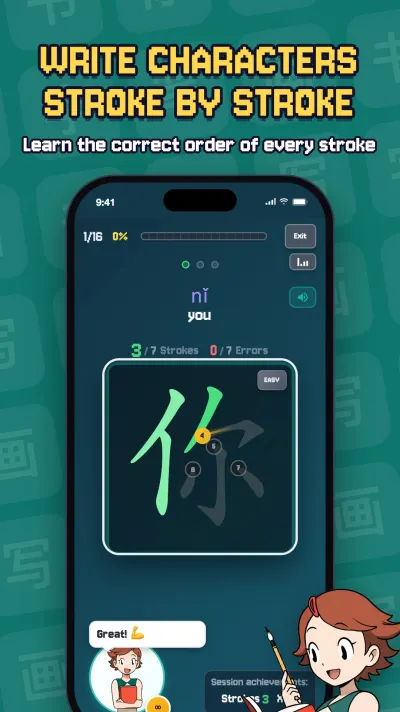
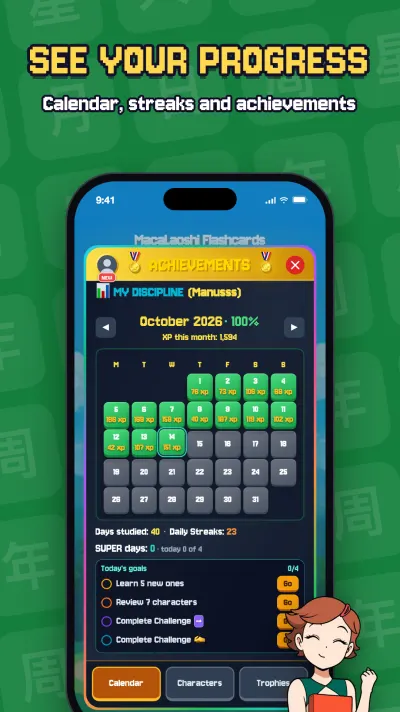
Improve your Chinese with Macalaoshi Flashcards
Maca Laoshi's app for learning characters, with audio, pinyin and stroke-by-stroke writing.
- 1,300+words and characters
- HSK 1–4by level
- Freeto start




Learn with our songs
We made them for Macalaoshi. Singing along is a fun way to practice pronunciation and review vocabulary.

The Lighthouse of My Heart 我心里灯塔

Study With You 跟你一起学
Frequently asked questions
What's the difference between Mandarin and Cantonese?
They're two different Chinese languages: they share much of their writing, but their speakers can't understand each other when they talk. Mandarin is the common language of China and Taiwan, and one of Singapore's official languages; Cantonese is spoken mainly in southern China, Hong Kong and Macau.
Can Mandarin speakers understand Cantonese?
Not when it's spoken, unless they've learned it. They can generally understand a formal text in standard written Chinese, but not Cantonese written the way it's spoken.
Do people in Hong Kong speak Mandarin?
The everyday language is Cantonese: in the 2021 census, 88.2% of people aged 5 and over usually spoke it, and 2.3% usually spoke Putonghua. Even so, 54.2% said they could speak Putonghua.
Which is harder, Mandarin or Cantonese?
The US State Department puts both in its hardest category for English speakers, with 88 weeks of classes. Cantonese has more tones, and its spoken form is further from standard written Chinese.
Is traditional Chinese the same as Cantonese?
No. Traditional Chinese is a way of writing the characters; Cantonese is a spoken language. In Taiwan, people speak Mandarin and write in traditional characters, just as in Hong Kong, where people speak Cantonese.
Maca Laoshi, born in Beijing, has taught Mandarin Chinese for more than 22 years and has had over 1,500 students. Together with her son Manu Shi, who has more than 93,000 subscribers on YouTube, she created Macalaoshi, an app that challenges you to push yourself one character at a time. Few Chinese teachers can show both: their own app and a channel like that.
Sources
- Brigham Young University: where Cantonese is spoken and why Cantonese and Mandarin are not mutually intelligible.
- Yue Chinese (Cantonese): about 85 million native speakers according to Ethnologue (2025).
- China's Ministry of Education (2026): in 2025, 87.72% of the population could speak Putonghua.
- China's Law on the Standard Spoken and Written Chinese Language (revised in 2025): Putonghua as the common language and the language of schools.
- Hong Kong 2021 Population Census (tables A107 and A111): usual spoken language and languages people are able to speak.
- Constitution of Singapore, Article 153A: its four official languages.
- Taiwan's Ministry of Foreign Affairs (2023–2024): the languages of Taiwan.
- Linguistic Society of Hong Kong: Jyutping (1993) and its six tones.
- Cheung Kwan-hin (Hong Kong Polytechnic University): six tones versus the traditional count of nine.
- Written Cantonese: its own characters, like 佢, 嘅 and 咗, and where they're used.
- US Foreign Service Institute: Mandarin and Cantonese in the hardest category (88 weeks).
This guide in other languages: Español · Português · Français · Deutsch · Italiano · 日本語 · 한국어