Guides › Traditional or simplified Chinese?
Traditional vs simplified Chinese: which should you learn?
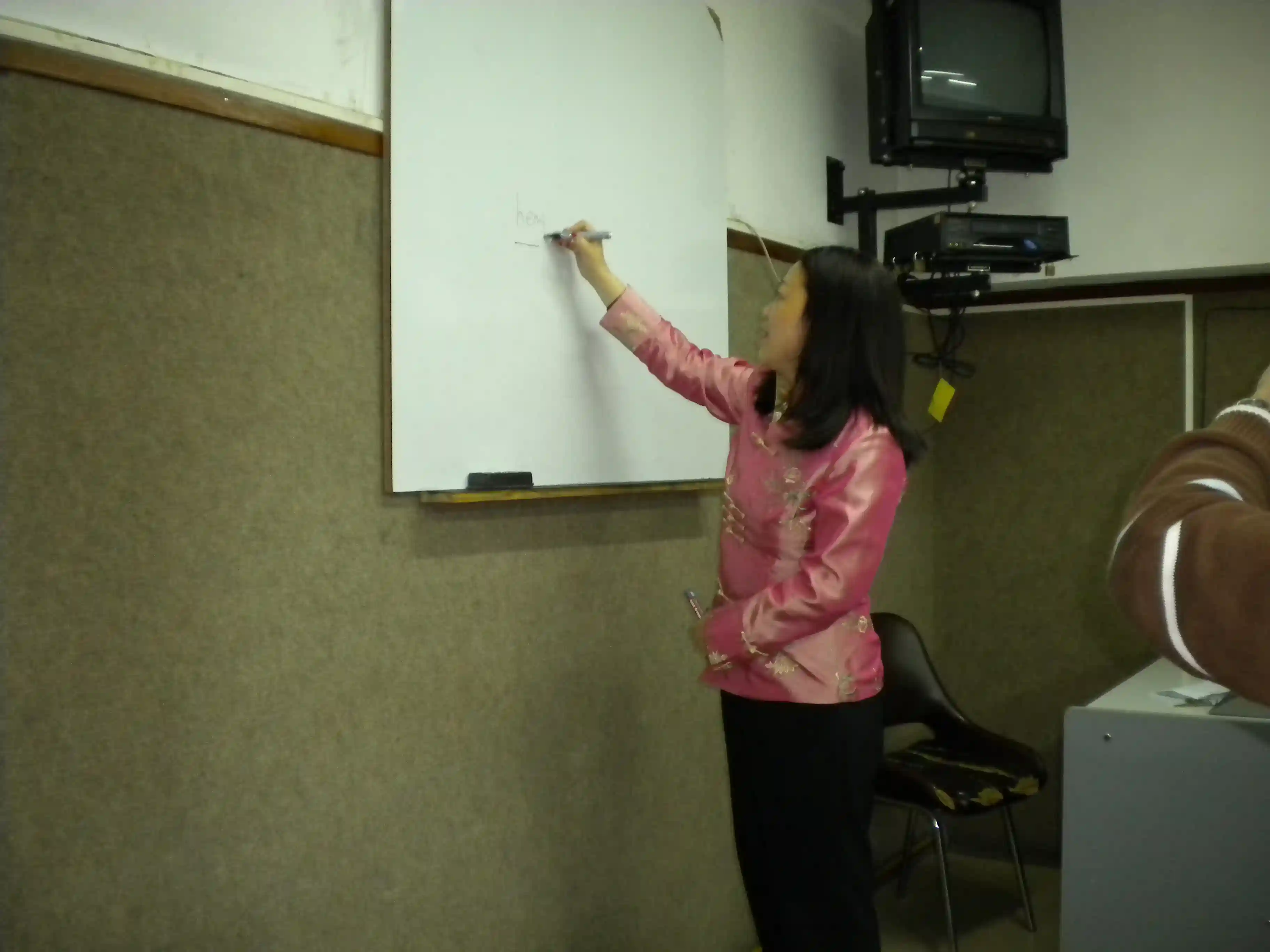
Maca Laoshi, Mandarin Chinese teacher
Updated October 20, 2026 · 7 min read
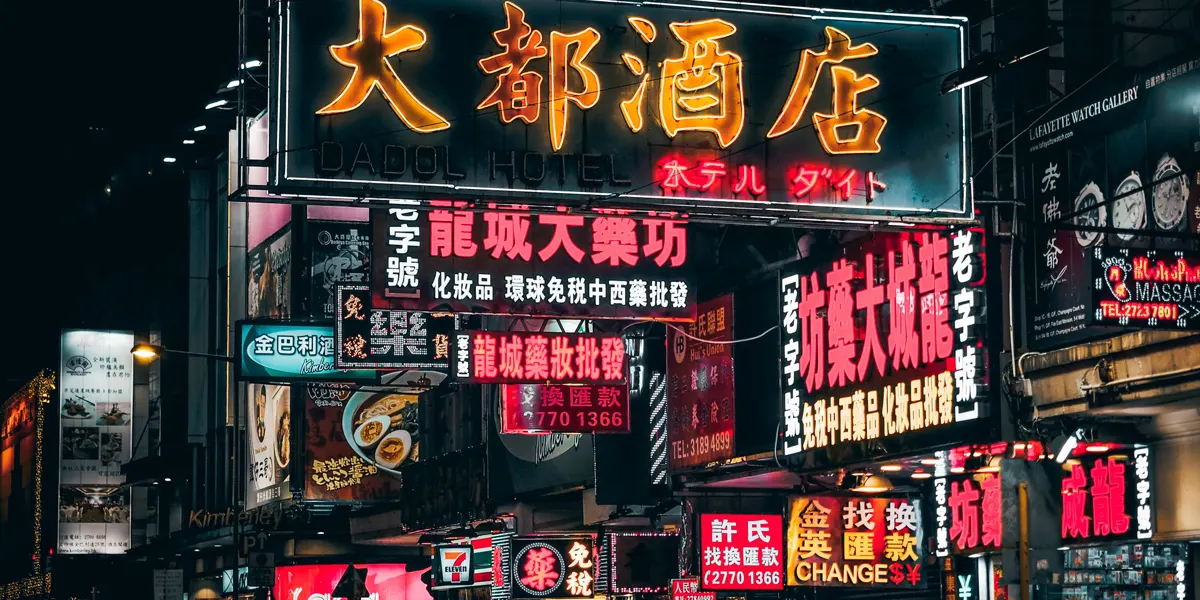
Unless you have a specific reason not to, learn simplified: it's what mainland China and Singapore use, what the HSK exam uses and what the UN uses. Learn traditional if you're going to live or work in Taiwan, Hong Kong or Macau. And it's not a lifelong decision: among HSK characters, almost two thirds are written the same way in both systems, and if you know one, you can learn to read the other with practice.
What's the difference?
It's the same language written in two ways. Simplified characters have fewer strokes; many others didn't change at all.
| Simplified | Traditional | Meaning |
|---|---|---|
| 学 | 學 | to study |
| 书 | 書 | book |
| 马 | 馬 | horse |
| 门 | 門 | door |
| 国 | 國 | country |
| 龙 | 龍 | dragon |
| 人 大 中 山 水 好 | 人 大 中 山 水 好 | the same in both |
Many changes follow patterns, but with a limit: 言, 金 and 糸 are simplified only when they sit on the left side of a character, as a side component. So 說 → 说 (to speak) and 語 → 语 (language); 錢 → 钱 (money) and 鐵 → 铁 (iron); 紅 → 红 (red) and 給 → 给 (to give). On their own or in another position, they don't change: 言 (word), 警 (alert, as in 警察, police), 金 (gold), 鑫 (prosperity) and 素 (plain) are written the same way in both systems.
How many change? There's no official figure. We ran the numbers on the 3,000 characters in the new HSK syllabus (2021): just over 60%, almost two thirds, are written the same way in both systems, and the rest have a different traditional form. That share applies to this list, not to every Chinese character.
 Test your Chinese
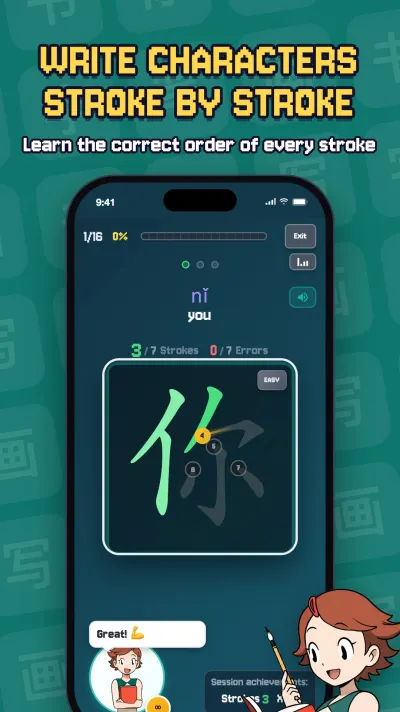
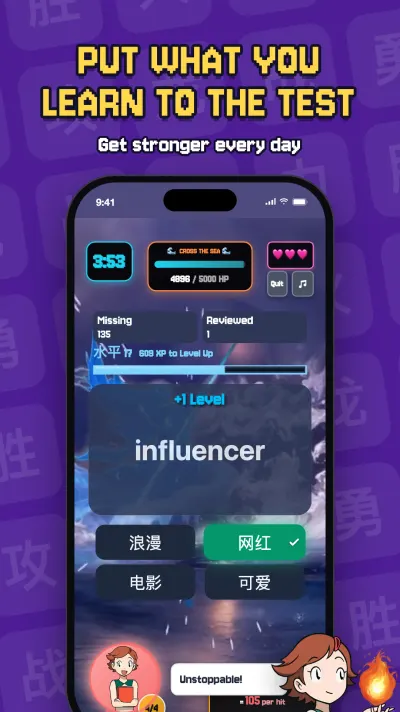
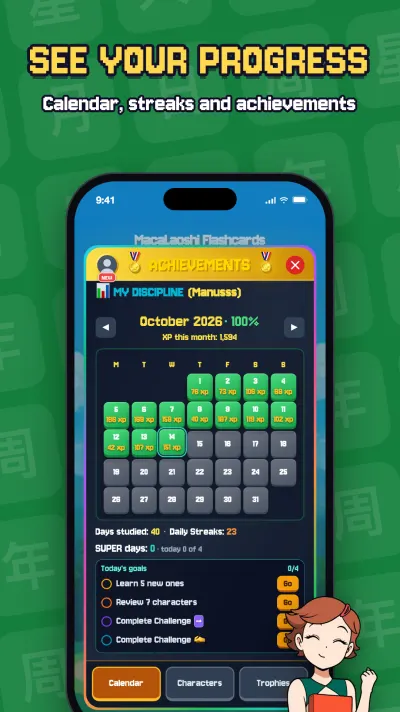
Improve your Chinese with our app, Macalaoshi Flashcards: 1,300+ words and characters to practice like this.
See the appWhere is each one used?
| Where | Script | Details |
|---|---|---|
| Mainland China | Simplified | The law on the common language sets “standard characters”; traditional ones are kept for cases like calligraphy or historical monuments. |
| Singapore | Simplified | Adopted from 1969 and brought in line with mainland China in 1976. |
| Malaysia | Simplified | Used in Chinese-medium schools. |
| Taiwan | Traditional | Following the Ministry of Education's list of standard forms. |
| Hong Kong and Macau | Traditional | Their Basic Laws only say “Chinese”; in practice, traditional is used. |
| UN | Simplified | Since 1971–72. The claim, sometimes repeated online, that the switch happened in 2008 is false. |
Watch out for a common mix-up: traditional is not the same as Cantonese. In Taiwan, people speak Mandarin and write in traditional; in Hong Kong, they mostly speak Cantonese and also write in traditional.
A little history
China published its first simplification scheme in 1956. The general table of simplified characters came out in 1964 and was reissued in 1986 with 2,235 simplified characters. There was a second round of simplification in 1977, but it was abolished in 1986, and those characters are no longer used.
What about exams and pinyin?
- HSK: China's official exam is in simplified characters.
- TOCFL: Taiwan's exam lets you choose between a traditional and a simplified version.
- Pinyin: it has been China's official system since 1958, and Taiwan adopted it as its official romanization in 2009, although Taiwanese schools teach Zhuyin (bopomofo) first, a separate set of symbols for pronunciation.
How to choose
| If your plan is to… | Learn |
|---|---|
| Study, work or travel in mainland China | Simplified |
| Take the HSK | Simplified |
| Live or study in Taiwan | Traditional |
| Live in Hong Kong or learn Cantonese | Traditional |
| Read classical texts or do calligraphy | Traditional |
| You don't know yet | Simplified |
Simplified is also the most common in learning materials. For reference, in a 2025 survey of Mandarin immersion programs in the United States, 92% taught simplified.
Can you learn both?
Yes, but one at a time. Start with the one you'll use and, once you have a foundation, learn to read the other: thanks to the simplification patterns, you won't be starting from zero. For study techniques, see how to memorize Chinese characters and how many characters you need.
Improve your Chinese with Macalaoshi Flashcards
Maca Laoshi's app for learning characters, with audio, pinyin and stroke-by-stroke writing.
- 1,300+words and characters
- HSK 1–4by level
- Freeto start


Learn with our songs
We made them for Macalaoshi. Singing along is a fun way to practice pronunciation and review vocabulary.
The Lighthouse of My Heart 我心里灯塔

Study With You 跟你一起学
Frequently asked questions
Should I learn traditional or simplified Chinese?
For most people, simplified: it's what mainland China and Singapore use, what the HSK uses and what the UN uses. Traditional makes sense if you're going to live or work in Taiwan, Hong Kong or Macau.
Does China use traditional or simplified Chinese?
Mainland China uses simplified. Traditional is used in Taiwan, Hong Kong and Macau.
Does Duolingo teach traditional or simplified Chinese?
Simplified. Duolingo's Chinese course uses simplified characters and has no option to learn with traditional characters.
Is traditional Chinese harder?
It has more strokes and takes longer to write, but its shapes often show a character's parts more clearly. For reading, the difference is smaller than it seems.
If I learn simplified, can I read traditional?
With practice, yes. In the HSK list, almost two thirds of characters are written the same way, and many of the ones that change follow fixed patterns, such as 言 becoming 讠 when it sits on the left (說 → 说).
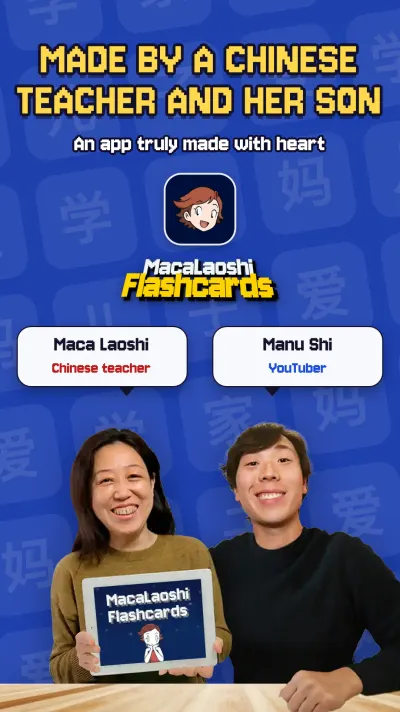
Maca Laoshi, born in Beijing, has taught Mandarin Chinese for more than 22 years and has had over 1,500 students. Together with her son Manu Shi, who has more than 93,000 subscribers on YouTube, she created Macalaoshi, an app that challenges you to push yourself one character at a time. Few Chinese teachers can show both: their own app and a channel like that.
Sources
- Ministry of Education of China: the law on the national common language and script, revised in December 2025 and in force from 2026.
- State Council of China (2013): Table of General Standard Chinese Characters.
- Chinese government (2006): the second round of simplification was abolished in 1986.
- Singapore Chinese characters: simplified characters adopted from 1969.
- Hong Kong Basic Law, Article 9: Chinese and English as official languages.
- Official languages of the United Nations: Chinese switched to simplified characters in 1971–72.
- TOCFL (Taiwan): practice tests in traditional and simplified characters.
- Taipei Times (2009): Taiwan adopts Hanyu Pinyin as its official romanization.
- Duolingo: Chinese (Simplified) course for English speakers.
- 2025 survey of Mandarin immersion programs in the United States (Nexus Mandarin).
- General List of Simplified Characters (1964), notes: 言, 食, 糸 and 金 are simplified only as left-side components (讠, 饣, 纟, 钅); on their own, they don't change (in Chinese).
- List of the 3,000 HSK 3.0 (2021) characters with their traditional forms, which we used for the count.
This guide in other languages: Español · Português · Français · Deutsch · Italiano · 日本語 · 한국어