Guides › Mandarin tones
The 4 Mandarin tones explained
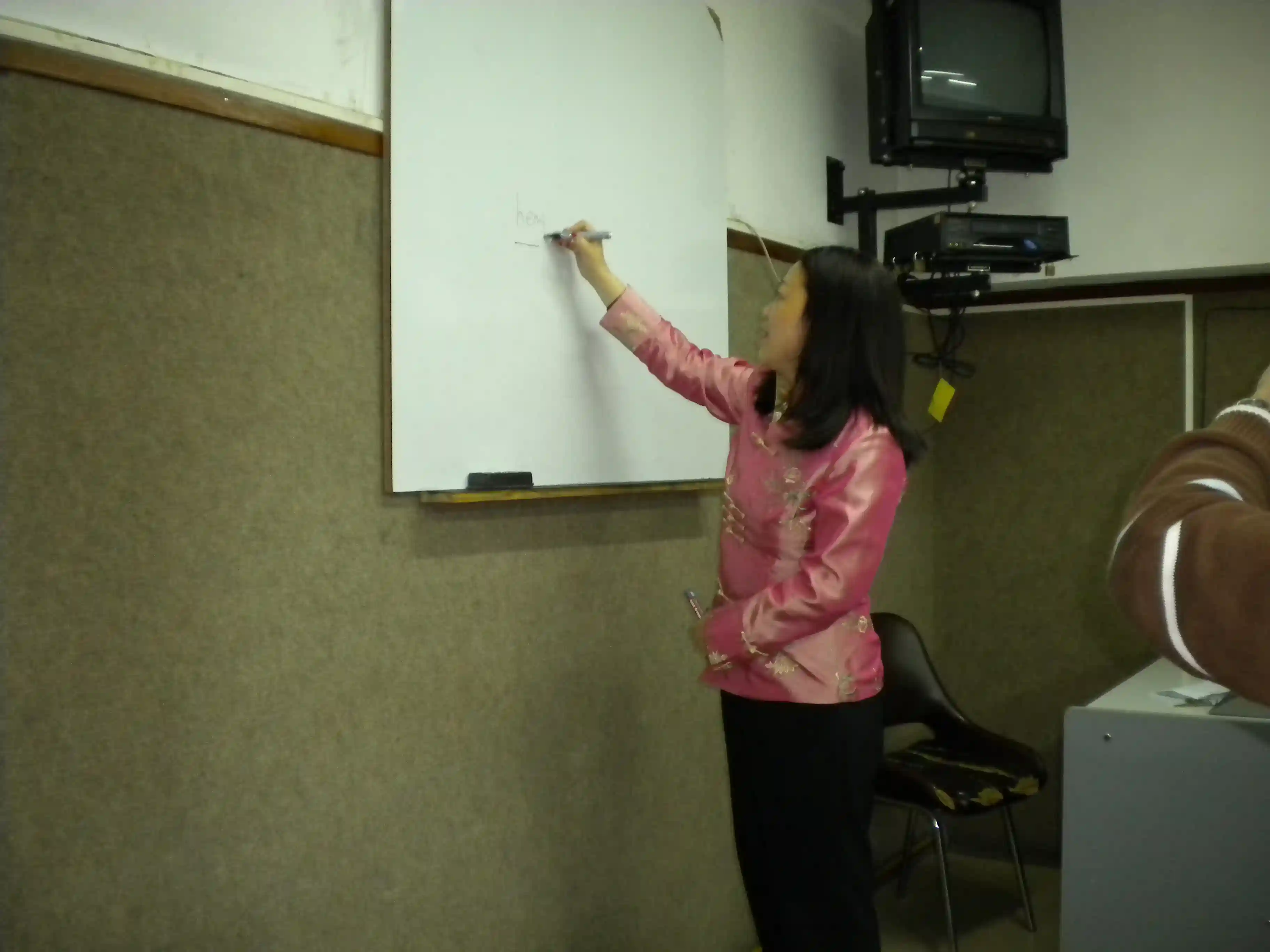
Maca Laoshi, Mandarin Chinese teacher
Updated October 20, 2026 · 8 min read
Mandarin Chinese has four tones plus a neutral tone. The first is high and level (mā), the second rises (má), the third is low (mǎ) and the fourth falls sharply (mà); the neutral tone is short and light (ma). Changing the tone changes the word: 妈 mā is “mom” and 马 mǎ is “horse”. You learn them by listening to and repeating whole words, and by knowing three tone change rules: two third tones in a row, 不 and 一.
The four tones and the neutral tone
In English, pitch shows emotion or turns a statement into a question, but the word stays the same. In Mandarin, pitch is part of the word. Picture your voice on a scale from 1 (lowest) to 5 (highest). The numbers in the table show the path your voice takes in each tone:
| Tone | How it sounds | Scale | Example |
|---|---|---|---|
| 1st | High and level, like holding a note | 5 → 5 | 妈 mā, mom |
| 2nd | Rises, like when you ask “huh?” | 3 → 5 | 麻 má, hemp |
| 3rd | Dips low and, at the end of a phrase or when stressed, rises again | 2 → 1 → 4 | 马 mǎ, horse |
| 4th | Falls fast and hard, like a command | 5 → 1 | 骂 mà, to scold |
| Neutral | Short and light; its pitch depends on the syllable before it | — | 吗 ma, question particle |
Listen to the four tones
Tap each syllable to hear it (synthetic voice from the Macalaoshi app).
The third tone is almost never said in full. Inside a sentence, before another tone, it's pronounced low, without rising. Linguists call this the “half-third tone”.
How the tones are marked in pinyin
The tone is marked with a sign over the main vowel of the syllable: ā á ǎ à. The neutral tone has no mark. To know which vowel gets it:
- If there's an a or an e, it goes on that: hǎo, xiè.
- In ou, it goes on the o: dōu.
- Otherwise, on the last vowel: duì, liù.
- On an i, the mark replaces the dot: nǐ.
Tone changes
Three rules change a tone depending on the syllable that follows. Pinyin writes the original tone, although many learning materials mark the changes of 一 and 不. The official HSK list, for example, writes 一起 yìqǐ and 不客气 bú kèqì, but it doesn't mark the change for two third tones: it writes 水果 shuǐguǒ, even though it's said shuíguǒ.
1. Two third tones in a row
The first one is pronounced as a second tone: 你好 is written nǐ hǎo and said ní hǎo. The same goes for 很好 (hěn hǎo, very good), which sounds like hén hǎo.
2. The tone of 不
不 (bù, not) changes to a second tone before a fourth tone: 不是 bú shì (isn't), 不要 bú yào (don't want). Before the other tones it stays bù: 不好 bù hǎo (not good).
3. The tone of 一
| When | Said as | Example |
|---|---|---|
| On its own, when counting or in ordinals | yī | 第一 dì yī, first |
| Before a fourth tone | yí | 一个 yí gè, one; 一下 yíxià, a moment |
| Before a first, second or third tone | yì | 一天 yì tiān, one day; 一年 yì nián, one year; 一起 yìqǐ, together |
 Test your Chinese
Improve your Chinese with our app, Macalaoshi Flashcards: 1,300+ words and characters to practice like this.
See the appThe neutral tone
It shows up on the second syllable of many words and in particles: 妈妈 māma (mom), 谢谢 xièxie (thank you), 吗 ma, 呢 ne. It's said short and effortlessly, and its pitch adjusts to the syllable before it.
The 20 tone pairs
In real speech, tones never come alone: each one runs into the next, and a huge number of Chinese words have two syllables. With the four tones, plus the neutral tone on the second syllable, there are 20 combinations. Here's a common word for each:
| Tones | Word | Pinyin | Meaning |
|---|---|---|---|
| 1 + 1 | 飞机 | fēijī | plane |
| 1 + 2 | 中国 | Zhōngguó | China |
| 1 + 3 | 身体 | shēntǐ | body, health |
| 1 + 4 | 商店 | shāngdiàn | shop |
| 1 + neutral | 桌子 | zhuōzi | table |
| 2 + 1 | 明天 | míngtiān | tomorrow |
| 2 + 2 | 学习 | xuéxí | to study |
| 2 + 3 | 没有 | méiyǒu | not have, there isn't |
| 2 + 4 | 学校 | xuéxiào | school |
| 2 + neutral | 朋友 | péngyou | friend |
| 3 + 1 | 老师 | lǎoshī | teacher |
| 3 + 2 | 小时 | xiǎoshí | hour |
| 3 + 3 | 水果 | shuǐguǒ (said shuíguǒ) | fruit |
| 3 + 4 | 米饭 | mǐfàn | cooked rice |
| 3 + neutral | 我们 | wǒmen | we |
| 4 + 1 | 面包 | miànbāo | bread |
| 4 + 2 | 问题 | wèntí | question, problem |
| 4 + 3 | 汉语 | Hànyǔ | Chinese (language) |
| 4 + 4 | 电视 | diànshì | television |
| 4 + neutral | 谢谢 | xièxie | thank you |
How to practice them
- Practice in pairs, not isolated syllables. Almost anyone can say a single tone; the hard part is linking them. Start with two-syllable words: 中国 Zhōngguó (1+2), 北京 Běijīng (3+1), 再见 zàijiàn (4+4).
- Exaggerate at first. Make the first tone really high and the fourth really sharp; over time they'll start to sound natural.
- Use your hand. Drawing the tone in the air as you say it helps your voice follow.
- Record yourself and compare with the audio of a native speaker or a teacher.
- Get feedback. An app with audio is great for listening; to know whether you're saying it right, the best option is someone who listens to you.
Common mistakes
- A first tone that drops at the end instead of staying high.
- A fourth tone that's too soft and sounds like a first.
- A third tone that always rises, even in the middle of a sentence.
- Raising your voice at the end of a question, as you would in English: in Chinese, that changes the tone of the last syllable. To ask a yes-or-no question, use 吗.
The tones are one of the reasons Chinese feels hard at first. If you want to see what else is hard and what's easier than it looks, read whether Chinese is hard to learn.
Improve your Chinese with Macalaoshi Flashcards
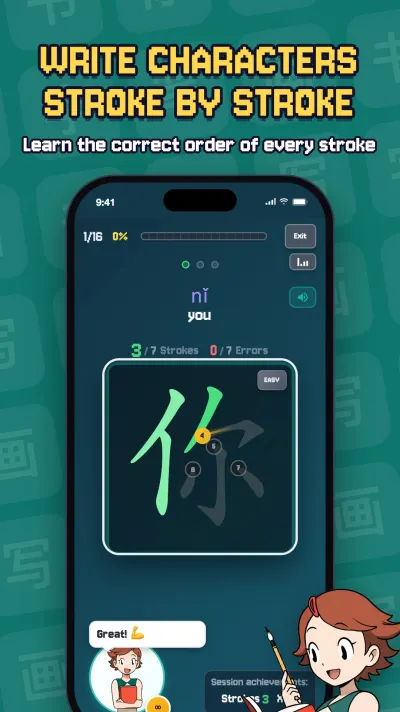
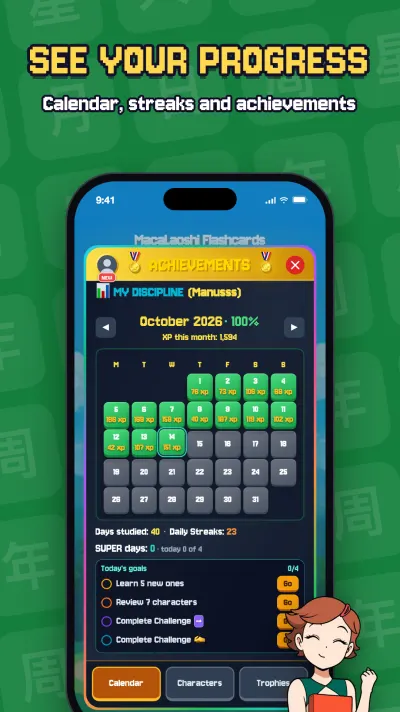
Maca Laoshi's app for learning characters, with audio, pinyin and stroke-by-stroke writing.
- 1,300+words and characters
- HSK 1–4by level
- Freeto start




Learn with our songs
We made them for Macalaoshi. Singing along is a fun way to practice pronunciation and review vocabulary.

The Lighthouse of My Heart 我心里灯塔

Study With You 跟你一起学
Frequently asked questions
How many tones does Mandarin Chinese have?
Four tones plus a neutral tone. The first is high and level, the second rises, the third is low and the fourth falls; the neutral tone is short and light.
What happens if I get a tone wrong?
It can change the word: mā is “mom” and mǎ is “horse”. In a conversation, context helps people understand you, but several mistakes in a row and they won't.
Why is 你好 pronounced “ní hǎo”?
Because when two third tones come together, the first one is pronounced as a second tone. In pinyin it's still written nǐ hǎo.
Where does the tone mark go in pinyin?
On the main vowel of the syllable. In practice: if there's an a or an e, it goes on that; in ou, on the o; otherwise, on the last vowel. On an i, the mark replaces the dot.
How can I practice the tones on my own?
Listen to and repeat two-syllable words rather than isolated syllables, record yourself and compare with the audio. Practicing tone pairs (for example, first plus second, as in 中国 Zhōngguó) helps the most.
Maca Laoshi, born in Beijing, has taught Mandarin Chinese for more than 22 years and has had over 1,500 students. Together with her son Manu Shi, who has more than 93,000 subscribers on YouTube, she created Macalaoshi, an app that challenges you to push yourself one character at a time. Few Chinese teachers can show both: their own app and a channel like that.
Sources
- Scheme for the Chinese Phonetic Alphabet (汉语拼音方案, 1958): four tones, neutral tone unmarked.
- Official pinyin orthography rules (GB/T 16159-2012): where the tone mark goes and how 一 and 不 are written.
- University of California, Berkeley: Mandarin tones (values 55, 35, 214 and 51).
- San Duanmu (2005): Mandarin Chinese phonology, including the 3+3 → 2+3 change.
- Standard Chinese phonology: the half-third tone and the tone changes of 一 and 不.
- HSK 3.0 (2021) vocabulary list with the pinyin from the official HSK website: it marks 一 and 不 (一起 yìqǐ, 不客气 bú kèqì) but not 3+3 (水果 shuǐguǒ). The words in the tone pair table come from it, all HSK 1 except 问题 (HSK 2).
This guide in other languages: Español · Português · Français · Deutsch · Italiano · 日本語 · 한국어