Guides › Historic places in China
Historic China: the places that tell its story
Maca Laoshi, Mandarin Chinese teacher
Updated October 27, 2026 · 11 min read
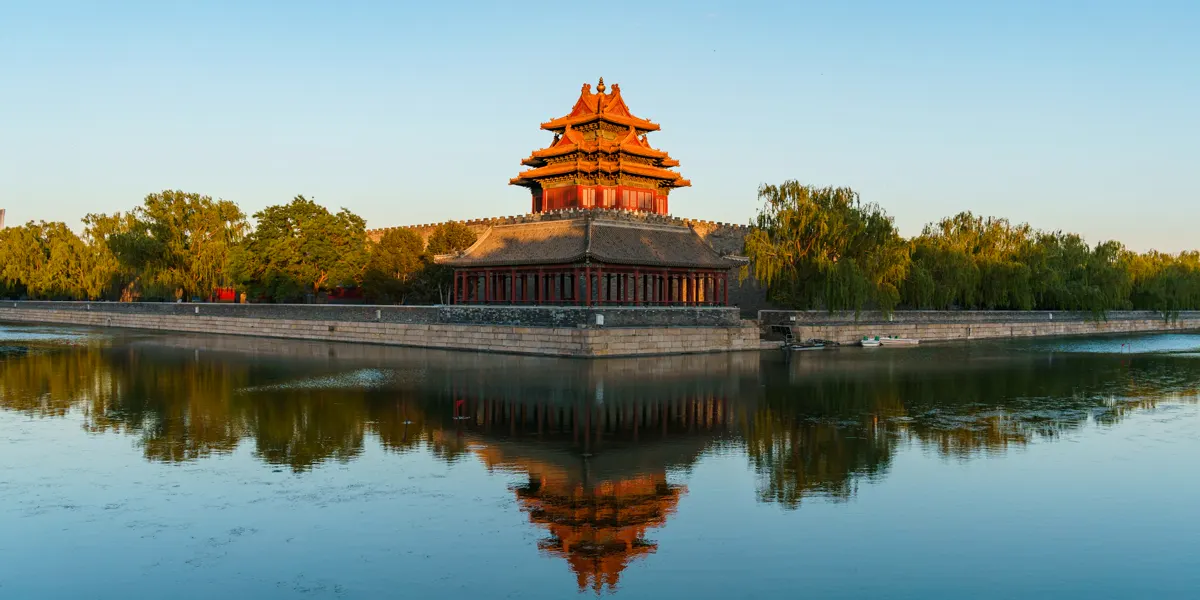
Ten places run through the history of China, from the Qin dynasty to the Qing: the Forbidden City, the Temple of Heaven, the Summer Palace and the Great Wall in Beijing; the Terracotta Army and the city wall of Xi'an; the Buddhist grottoes of Longmen, Yungang and Mogao; the walled city of Pingyao, and Qufu, the land of Confucius. Most require booking ahead and several close on Mondays. This guide covers mainland China.
The 10 places at a glance
The stars are Macalaoshi's own rating, our editorial opinion: they are not user reviews or scores from other sites. They depend on how unique the place is, how easy it is to reach and how much you enjoy it on a first visit. The days are our own suggestion.
| Place | Where | Rating | Best for | Days | Best time |
|---|---|---|---|---|---|
| The Forbidden City (故宫, Gùgōng) | Beijing | ★★★★★ | Imperial history | Half a day | Spring and autumn |
| The Temple of Heaven (天坛, Tiāntán) | Beijing | ★★★★☆ | Architecture, parks | Half a day | Spring and autumn |
| The Summer Palace (颐和园, Yíhéyuán) | Beijing | ★★★★☆ | Gardens, lake | Half a day | Spring and autumn |
| The Great Wall (长城, Chángchéng) | Beijing and Hebei | ★★★★★ | History, hiking | 1 day | Spring and autumn |
| Xi'an: Terracotta Army and city wall (兵马俑, Bīngmǎyǒng) | Xi'an (Shaanxi) | ★★★★★ | Ancient history | 1 to 2 days | Spring and autumn |
| Luoyang: the Longmen Grottoes (龙门石窟, Lóngmén Shíkū) | Luoyang (Henan) | ★★★★☆ | Buddhist art | Half a day | Spring and autumn |
| Datong: the Yungang Grottoes (云冈石窟, Yúngāng Shíkū) | Datong (Shanxi) | ★★★★☆ | Buddhist art | Half a day | Spring and autumn |
| Pingyao (平遥古城, Píngyáo gǔchéng) | Pingyao (Shanxi) | ★★★★☆ | Old town | 1 day and a night | Spring and autumn |
| Dunhuang: the Mogao Caves (莫高窟, Mògāo Kū) | Dunhuang (Gansu) | ★★★★★ | Art, the Silk Road | 2 days | Spring and autumn |
| Qufu, land of Confucius (曲阜, Qūfù) | Qufu (Shandong) | ★★★☆☆ | Confucius | Half a day | Spring and autumn |
The 10 places, one by one
Bookings and opening hours change: confirm them with the official channel before you travel. For the big picture, see our guide to what to see in China.
1. The Forbidden City (故宫, Gùgōng)
Why go. The palace of 24 Ming and Qing emperors, completed in 1420: it covers more than a million square metres and has been a UNESCO site since 1987. It has been a museum since 1925, with more than 1.86 million pieces.
Macalaoshi rating: ★★★★★ — China's great imperial palace; allow half a day.
Practical tip. There are no same-day tickets: book under your real name in the official WeChat mini program (sales open seven days ahead). A passport is accepted; enter with the original through the Meridian Gate. Closed on Mondays except public holidays.
What to eat there: 北京烤鸭 (Běijīng kǎoyā, Peking duck); 涮羊肉 (shuàn yángròu, instant-boiled mutton hotpot)
Words you will see there
| Chinese | Pinyin | Meaning |
|---|---|---|
| 故宫 | Gùgōng | Forbidden City (former imperial palace) |
| 午门 | Wǔmén | Meridian Gate, the entrance |
| 闭馆 | bìguǎn | closed (a museum) |
2. The Temple of Heaven (天坛, Tiāntán)
Why go. Built in 1420 under the Ming emperor Yongle, it covers about 273 hectares. The emperors prayed here for good harvests. It has been a UNESCO site since 1998.
Macalaoshi rating: ★★★★☆ — ritual architecture inside a park; good for a morning.
Practical tip. The paid attractions (the Hall of Prayer, the Circular Mound Altar and the Echo Wall) close on Mondays except public holidays and are booked under your real name 1 to 7 days ahead through the official WeChat account. Foreigners show the ticket code and their ID document.
What to eat there: 炸酱面 (zhájiàngmiàn, noodles with fermented soybean sauce); 豆汁 (dòuzhī, fermented mung bean drink)
Words you will see there
| Chinese | Pinyin | Meaning |
|---|---|---|
| 天坛 | Tiāntán | Temple of Heaven |
| 祈年殿 | Qíniándiàn | Hall of Prayer for Good Harvests |
| 回音壁 | Huíyīnbì | Echo Wall |
3. The Summer Palace (颐和园, Yíhéyuán)
Why go. An imperial garden of the Qing: the Qingyi Garden was built in 1750 and rebuilt in 1886 under its present name. It covers about 297 hectares, three quarters of it lake, and its Long Corridor is 728 m long. It has been a UNESCO site since 1998.
Macalaoshi rating: ★★★★☆ — lake and gardens for a long stroll.
Practical tip. You can book tickets 1 to 7 days ahead on its official WeChat account or buy them at the park's ticket window with your passport. The paid attractions close on Mondays in the low season, except public holidays.
What to eat there: 糖葫芦 (tánghúlu, candied fruit on a stick)
Words you will see there
| Chinese | Pinyin | Meaning |
|---|---|---|
| 颐和园 | Yíhéyuán | Summer Palace |
| 昆明湖 | Kūnmíng Hú | Kunming Lake |
| 长廊 | chángláng | Long Corridor |
4. The Great Wall (长城, Chángchéng)
Why go. A UNESCO site since 1987. There are walls from the 7th century BC, but the best-known sections are from the Ming dynasty (1368-1644), in brick and stone. Badaling was the first section opened to the public in the People's Republic, and Jinshanling has 67 watchtowers over 11 km.
Macalaoshi rating: ★★★★★ — a must; choose the section by how much you want to walk.
Practical tip. Badaling is the most accessible and the most crowded; Mutianyu, restored and with a cable car and toboggan, requires a real-name booking and accepts a passport; Jinshanling, in Hebei, is the least visited.
What to eat there: 北京烤鸭 (Běijīng kǎoyā, Peking duck)
Words you will see there
| Chinese | Pinyin | Meaning |
|---|---|---|
| 长城 | Chángchéng | Great Wall |
| 缆车 | lǎnchē | cable car |
| 滑道 | huádào | toboggan |
5. Xi'an: Terracotta Army and city wall (兵马俑 / 西安城墙, Bīngmǎyǒng / Xī'ān chéngqiáng)
Why go. The Terracotta Army (UNESCO, 1987) appeared in 1974 near the mausoleum of the first Qin emperor: more than 8,000 soldiers are estimated, and it is said that no two faces are alike. Xi'an's Ming wall, begun in 1370, is 13.74 km long and 12 m high, and you can walk along the top.
Macalaoshi rating: ★★★★★ — unique in the world; the wall completes it.
Practical tip. Buy tickets only through the museum's official channels; foreigners show their passport when buying and entering. Tourist bus 5 (306) leaves from in front of the train station. Bikes can be rented on the wall, except when rain is likely.
What to eat there: 肉夹馍 (ròujiāmó, stuffed bun with meat); 凉皮 (liángpí, cold noodles with chili and vinegar); 羊肉泡馍 (yángròu pàomó, bread torn into lamb or beef broth)
Words you will see there
| Chinese | Pinyin | Meaning |
|---|---|---|
| 兵马俑 | bīngmǎyǒng | Terracotta Army |
| 城墙 | chéngqiáng | city wall |
| 博物馆 | bówùguǎn | museum |
6. Luoyang: the Longmen Grottoes (龙门石窟, Lóngmén Shíkū)
Why go. About 12 km south of Luoyang, on the Yi River. Carving began around 493, when the Northern Wei dynasty moved its capital to Luoyang; the Fengxian Vairocana Buddha, about 17 m tall, was carved between 672 and 676 with the support of Empress Wu Zetian. A UNESCO site since 2000.
Macalaoshi rating: ★★★★☆ — great Buddhist sculpture, a short hop from high-speed rail.
Practical tip. Luoyang Longmen station is on the Zhengzhou-Xi'an high-speed line: from Beijing West, about 3 h 7 min on the fastest train; from Xi'an, 1.5 to 2 hours. A direct bus runs from the station to the grottoes.
What to eat there: 洛阳水席 (Luòyáng shuǐxí, traditional 24-course banquet); 不翻汤 (bùfān tāng, pork, chicken and mutton soup with glass noodles)
Words you will see there
| Chinese | Pinyin | Meaning |
|---|---|---|
| 龙门石窟 | Lóngmén Shíkū | Longmen Grottoes |
| 石窟 | shíkū | grotto |
| 佛 | fó | Buddha |
7. Datong: the Yungang Grottoes (云冈石窟, Yúngāng Shíkū)
Why go. About 16 km west of Datong, they were carved in the Northern Wei period (until 525) and hold more than 50,000 sculptures. A UNESCO site since December 2001. Nearby is the Hanging Temple, built into a cliff.
Macalaoshi rating: ★★★★☆ — monumental sculptures, easy to visit from Beijing by train.
Practical tip. Since 1 January 2025 entry requires an online real-name booking in the "云冈研究院" WeChat mini program, up to 7 days ahead; there is no ticket office. From Beijing the high-speed train takes under two and a half hours.
What to eat there: 刀削面 (dāoxiāo miàn, knife-cut noodles, a Shanxi speciality)
Words you will see there
| Chinese | Pinyin | Meaning |
|---|---|---|
| 云冈石窟 | Yúngāng Shíkū | Yungang Grottoes |
| 大同 | Dàtóng | Datong |
| 预约 | yùyuē | booking |
8. Pingyao (平遥古城, Píngyáo gǔchéng)
Why go. A walled city in Shanxi. Its walls, from 1370, are about 6.2 km long and 12 m high, with six gates, and inside stand almost 4,000 shops and houses from the 17th to 19th centuries. A UNESCO site since 1997.
Macalaoshi rating: ★★★★☆ — an old town with a life of its own; best with a night's stay.
Practical tip. According to Wikivoyage, entering the city is free and about 20 sites are visited with a common ticket valid for 3 days; the wall can be walked until sunset. The high-speed station is about 10 km away.
What to eat there: 平遥牛肉 (Píngyáo niúròu, cured beef, a local speciality); 牛肉火烧 (niúròu huǒshāo, beef-filled flatbread)
Words you will see there
| Chinese | Pinyin | Meaning |
|---|---|---|
| 平遥 | Píngyáo | Pingyao |
| 古城 | gǔchéng | old town |
| 客栈 | kèzhàn | inn |
9. Dunhuang: the Mogao Caves (莫高窟, Mògāo Kū)
Why go. An oasis on the Silk Road, about 25 km from Dunhuang. The first caves were dug in 366; there are now 735, with 45,000 m² of murals, and in 1900 the Library Cave appeared, with about 50,000 documents. A UNESCO site since 1987.
Macalaoshi rating: ★★★★★ — unique in the world, though getting there takes effort.
Practical tip. It has worked by reservation only since 2014 and there is no ticket office on site; in the peak season (1 April to 30 November) there are daily quotas. Book on the official site "莫高窟参观预约网". The visit is guided, about 2 hours and about 15 caves.
What to eat there: 杏皮水 (xìngpíshuǐ, apricot-peel drink); 驴肉黄面 (lǘròu huángmiàn, yellow noodles with donkey meat)
Words you will see there
| Chinese | Pinyin | Meaning |
|---|---|---|
| 莫高窟 | Mògāo Kū | Mogao Caves |
| 壁画 | bìhuà | mural |
| 预约 | yùyuē | booking |
10. Qufu, land of Confucius (曲阜 / 孔庙, Qūfù / Kǒngmiào)
Why go. Qufu was the capital of the State of Lu. The "Three Kongs" (三孔) are the Temple of Confucius, the Kong Mansion, where his direct descendants lived, and the Kong Forest, the family cemetery. They have been UNESCO sites since 1994.
Macalaoshi rating: ★★★☆☆ — interesting above all if Confucius appeals to you.
Practical tip. Qufu East station is on the Beijing-Shanghai high-speed line, several kilometres from the town; bus K01 reaches the centre. The Temple and the Mansion can be covered on foot; the Forest is about 2 km away. According to Wikivoyage, it is quiet in winter.
What to eat there: 孔府糕点 (Kǒngfǔ gāodiǎn, pastries from the Kong Mansion); 巧果 (qiǎoguǒ, fruit-shaped pastries)
Words you will see there
| Chinese | Pinyin | Meaning |
|---|---|---|
| 曲阜 | Qūfù | Qufu |
| 孔子 | Kǒngzǐ | Confucius |
| 孔庙 | Kǒngmiào | Temple of Confucius |
| 孔府 | Kǒngfǔ | Kong Mansion |
 Test your Chinese
Improve your Chinese with our app, Macalaoshi Flashcards: 1,300+ words and characters to practice like this.
See the appA timeline in seven stops
- 5th century BC: Qufu, where Confucius's house (551-479 BC) was consecrated as a temple soon after his death.
- 3rd century BC (Qin): the Terracotta Army.
- From 366: the first Mogao caves.
- 386-534 (Northern Wei): Yungang (until 525) and Longmen (from around 493).
- 618-907 (Tang): the great Fengxian Buddha at Longmen (672-676).
- 1368-1644 (Ming): the Forbidden City and the Temple of Heaven (1420), the walls of Xi'an and Pingyao (1370) and the best-known sections of the Great Wall.
- 1644-1912 (Qing): the Summer Palace (1750; rebuilt in 1886).
How to combine them and when to go
Beijing (Forbidden City, Temple of Heaven, Summer Palace and Great Wall) needs about 4 days. Xi'an and Luoyang are linked by the Zhengzhou-Xi'an high-speed line, 1.5 to 2 hours apart. In Shanxi, Datong and Pingyao lie on the Datong-Xi'an line. Dunhuang has an international airport and a railway, and Qufu is on the Beijing-Shanghai line.
Spring and autumn are the most comfortable seasons. Datong's January average is -10.5 °C; Dunhuang has recorded everything from -30.5 °C to 43.1 °C; Luoyang gets most of its rain in July and August. For other destinations, see our guides to what to see in China and natural landscapes; if you like the ancient era and writing, see historical dramas and calligraphy.
Traveller's vocabulary
Some of these words are from HSK 1 and HSK 2, the levels Macalaoshi trains, and help you read opening hours and gates. To speak, there are 50 Chinese phrases for travel, and for prices, the numbers.
| Chinese | Pinyin | Meaning | HSK level |
|---|---|---|---|
| 博物馆 | bówùguǎn | museum | — |
| 古城 | gǔchéng | old town | — |
| 城墙 | chéngqiáng | city wall | — |
| 寺 | sì | Buddhist temple | — |
| 庙 | miào | temple | — |
| 塔 | tǎ | pagoda | — |
| 石窟 | shíkū | grotto | — |
| 壁画 | bìhuà | mural | — |
| 皇帝 | huángdì | emperor | — |
| 门票 | ménpiào | entrance ticket | HSK 2 |
| 预约 | yùyuē | booking; to book | — |
| 闭馆 | bìguǎn | closed (a museum) | — |
| 导游 | dǎoyóu | tour guide | — |
| 门 | mén | gate, door | HSK 2 |
| 里面 | lǐmiàn | inside | HSK 2 |
| 上午 | shàngwǔ | morning (until noon) | HSK 1 |
Pinyin is given as in the dictionary. In speech, two third tones in a row turn the first into a second tone: 孔子 sounds Kóngzǐ and 孔府, Kóngfǔ.
How Macalaoshi does it
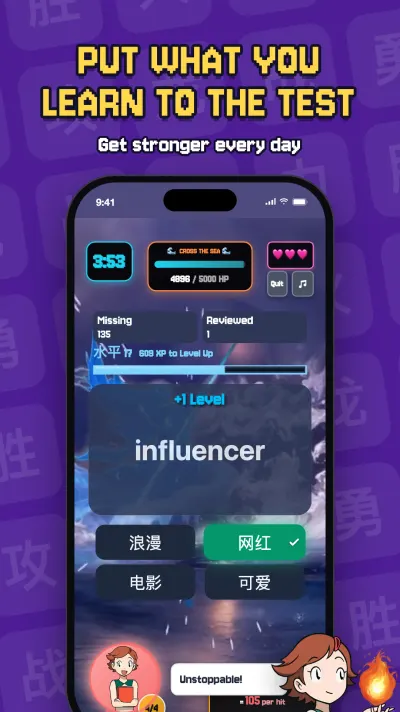
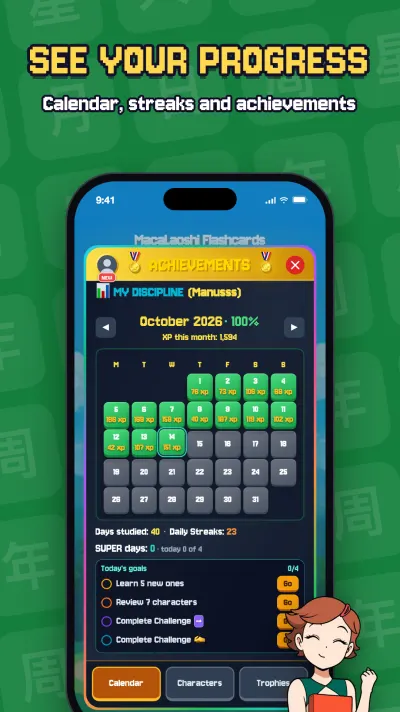
The names of temples, gates and museums read more easily when you recognize the characters. In Macalaoshi you learn them through challenges to save the world from the Empress with the power of Chinese characters: more than 1300 words and characters from HSK 1 to 4, bosses, stroke-by-stroke writing in the correct order and story mode with Lili. Every character you get right goes up a level and what you miss comes back for you to review. Getting started is free; to see how they are drawn, see stroke order.
Improve your Chinese with Macalaoshi Flashcards
Maca Laoshi's app for learning characters, with audio, pinyin and stroke-by-stroke writing.
- 1,300+words and characters
- HSK 1–4by level
- Freeto start




Learn with our songs
We made them for Macalaoshi. Singing along is a fun way to practice pronunciation and review vocabulary.
The Lighthouse of My Heart 我心里灯塔

Study With You 跟你一起学
Frequently asked questions
Which historic places in China should you see first?
For a first visit: the Forbidden City and the Great Wall in Beijing, and the Terracotta Army in Xi'an. After that, depending on your interests: the Longmen, Yungang or Mogao grottoes, Pingyao or Qufu.
Which section of the Great Wall should you choose?
Badaling is the most accessible and the most crowded; Mutianyu is restored, has a cable car and is a good first choice; Jinshanling, in Hebei, is the least visited and suits walkers. Mutianyu requires a real-name booking.
Which sites close on Mondays?
The Palace Museum (Forbidden City) closes on Mondays except public holidays. So do the paid attractions of the Temple of Heaven, and those of the Summer Palace in the low season. Always check the official calendar.
Do you have to book the Mogao and Yungang grottoes?
Yes. Mogao has worked by reservation only since 2014 and has no ticket office on site. Yungang has required online real-name booking since 1 January 2025, up to 7 days ahead.
When was the Forbidden City completed and how many emperors lived there?
It was completed in 1420 and 24 emperors of the Ming and Qing dynasties lived there. It has been a UNESCO World Heritage Site since 1987.
Does this guide include Taiwan, Hong Kong or Macao?
No. It covers mainland China, where the simplified characters taught by Macalaoshi are used.
Maca Laoshi, born in Beijing, has taught Mandarin Chinese for more than 22 years and has had over 1,500 students. Together with her son Manu Shi, who has more than 93,000 subscribers on YouTube, she created Macalaoshi, an app that challenges you to push yourself one character at a time. Few Chinese teachers can show both: their own app and a channel like that.
Sources
- Beijing government (19 July 2024): Palace Museum, Monday closing, advance tickets, 1420 and UNESCO 1987.
- Beijing government (29 June 2023): real-name booking, passport accepted and entry through the Meridian Gate.
- Beijing government (19 July 2024): Temple of Heaven, built in 1420, 273 hectares, UNESCO 1998, closing days and bookings.
- Beijing government (March 2026): Summer Palace, built in 1750, rebuilt in 1886, UNESCO 1998, bookings and closing days.
- Wikipedia: Summer Palace, 297 hectares, three quarters lake and the 728 m Long Corridor.
- Wikipedia: UNESCO inscription years of China's sites (UNESCO's own website blocks automated access).
- Wikipedia: Great Wall, UNESCO 1987, 7th-century BC walls, Ming dynasty, Badaling and Jinshanling.
- Mutianyu, official notice (18 July 2023): real-name booking, passport, cable car and toboggan.
- Visit Beijing (2015): Badaling, Mutianyu and Jinshanling, accessibility and crowds.
- Wikipedia: Terracotta Army, discovery in 1974 and the 2007 estimates.
- China Daily (7 May 2026): foreigners show their passport when buying and entering the Xi'an museum.
- Wikipedia: Xi'an city walls, begun in 1370, 13.74 km long and 12 m high.
- Wikivoyage: Xi'an, bus 306, bike rental on the wall and best seasons.
- Wikipedia: Longmen Grottoes, 493, the Fengxian Buddha and UNESCO 2000.
- Wikivoyage: Luoyang, Longmen high-speed station and journey times.
- Wikipedia: Luoyang, the 24-course Water Banquet and the "no-flipping" soup.
- Wikipedia: Yungang Grottoes, Northern Wei, until 525 and UNESCO 2001.
- China News Service (1 January 2025): online real-name booking at Yungang from 2025, up to 7 days ahead.
- Wikipedia: Datong, the Hanging Temple, more than 50,000 carvings and knife-cut noodles.
- Wikivoyage: Datong, high-speed station and times from Beijing, Taiyuan and Pingyao.
- Wikipedia: Pingyao, 1370 walls, UNESCO 1997 and Pingyao beef.
- Wikivoyage: Pingyao, free entry, 3-day common ticket and the wall.
- Wikipedia: Mogao Caves, 366, the Library Cave of 1900, UNESCO 1987 and 25 km from Dunhuang.
- Xinhua via China Daily (26 August 2019): 735 caves, 45,000 m² of murals and about 110 open to visitors.
- Sina Travel (9 July 2026): reservation mandatory since 2014, no ticket office and peak-season quotas.
- Wikivoyage: Dunhuang, guided visit of about 2 hours and 15 caves.
- China Daily (13 February 2026): Dunhuang night market and apricot-peel water.
- Wikipedia: Qufu, capital of the State of Lu, the "Three Kongs" and UNESCO 1994.
- Wikivoyage: Qufu, Qufu East station, bus K01 and getting around on foot.
- Wikipedia: timeline of Chinese history, Tang, Ming and Qing dynasties.
- CC-CEDICT (MDBG, version of 3 October 2026): pinyin and meaning of the words in the tables.
- CLEC (China): the new HSK syllabus (November 2025), basis of the HSK 1 and 2 lists behind the level column.
This guide in other languages: Español · Português · Français · Deutsch · Italiano · 日本語 · 한국어