Guides › Chinese travel phrases
Chinese phrases for travel: the ones you'll actually use
Maca Laoshi, Mandarin Chinese teacher
Updated October 20, 2026 · 9 min read

For a trip to China, about 50 short phrases grouped by situation are all you need. The most useful are 你好 (nǐ hǎo, hello), 谢谢 (xièxie, thank you), 多少钱? (duōshao qián?, how much is it?), 我听不懂 (wǒ tīng bu dǒng, I don't understand) and …在哪儿? (… zài nǎr?, where is…?). Carry your hotel's address written in characters and save the emergency numbers: 110 for the police, 120 for an ambulance and 119 for the fire department.
Greetings and being polite
| Chinese | Pinyin | Meaning |
|---|---|---|
| 你好 | nǐ hǎo | Hello |
| 谢谢 | xièxie | Thank you |
| 不客气 | bù kèqi | You're welcome |
| 不好意思 | bù hǎoyìsi | Excuse me, sorry to bother you |
| 对不起 | duìbuqǐ | I'm sorry |
| 请问… | qǐngwèn… | Excuse me, could you tell me…? |
| 再见 | zàijiàn | Goodbye |
The pinyin in the tables is written as in the dictionary. In speech, 不 (bù) becomes bú before a fourth tone: 不客气 sounds like bú kèqi. And 一 (yī) becomes yì before a first, second or third tone, and yí before a fourth: 一点 sounds like yìdiǎn, and 一下 like yíxià. We explain it in the 4 Mandarin tones.
When you don't understand
| Chinese | Pinyin | Meaning |
|---|---|---|
| 我听不懂 | wǒ tīng bu dǒng | I don't understand (what you're saying) |
| 我不会说中文 | wǒ bù huì shuō Zhōngwén | I don't speak Chinese |
| 你会说英语吗? | nǐ huì shuō Yīngyǔ ma? | Do you speak English? |
| 请说慢一点 | qǐng shuō màn yīdiǎn | Please speak more slowly |
| 可以写下来吗? | kěyǐ xiě xiàlai ma? | Could you write it down? |
At a restaurant
| Chinese | Pinyin | Meaning |
|---|---|---|
| 服务员! | fúwùyuán! | To call the waiter or waitress |
| 有英文菜单吗? | yǒu Yīngwén càidān ma? | Do you have an English menu? |
| 我要这个 | wǒ yào zhège | I'll have this (pointing) |
| 不要辣 | bù yào là | Not spicy, please |
| 我吃素 | wǒ chī sù | I'm vegetarian |
| 我对花生过敏 | wǒ duì huāshēng guòmǐn | I'm allergic to peanuts |
| 可以打包吗? | kěyǐ dǎbāo ma? | Can I get this to go? |
| 买单! | mǎidān! | The bill, please! |
To ask for the bill, say 服务员,买单! (fúwùyuán, mǎidān!). You'll also hear 结账 (jiézhàng), which means the same thing, “to pay the bill”, and is a bit more formal. For a different allergy, swap 花生 for the word you need: the pattern is 我对…过敏 (wǒ duì … guòmǐn).
Shopping
| Chinese | Pinyin | Meaning |
|---|---|---|
| 多少钱? | duōshao qián? | How much is it? |
| 太贵了 | tài guì le | It's too expensive |
| 能便宜一点吗? | néng piányi yīdiǎn ma? | Could you make it a little cheaper? |
| 我随便看看 | wǒ suíbiàn kànkan | I'm just looking |
| 不用了,谢谢 | bùyòng le, xièxie | No thanks (I don't need it) |
| 可以刷卡吗? | kěyǐ shuā kǎ ma? | Can I pay by card? |
| 可以用支付宝吗? | kěyǐ yòng Zhīfùbǎo ma? | Can I pay with Alipay? |
| 可以付现金吗? | kěyǐ fù xiànjīn ma? | Can I pay in cash? |
Written prices use 元 (yuán); in speech, people often say 块 (kuài), which is more casual: 五十块 is 50 yuan. To understand the answer, brush up on Chinese numbers before you go.
 Test your Chinese
Improve your Chinese with our app, Macalaoshi Flashcards: 1,300+ words and characters to practice like this.
See the appTaxis, the subway and trains
| Chinese | Pinyin | Meaning |
|---|---|---|
| 我要去… | wǒ yào qù … | I want to go to… |
| 师傅,去这个地方 | shīfu, qù zhège dìfang | (To the driver) This place, please |
| 在这儿停一下 | zài zhèr tíng yīxià | Stop here, please |
| …在哪儿? | … zài nǎr? | Where is…? |
| 地铁站 | dìtiězhàn | Subway station |
| 火车站 | huǒchēzhàn | Train station |
| 机场 | jīchǎng | Airport |
- Show the address written in characters. It's much safer than trying to pronounce a street name. Save your hotel's name and address in Chinese on your phone, or ask the front desk to write them down for you.
- 师傅 (shīfu) is the respectful way to address someone who has a trade, like a taxi driver.
At the hotel
| Chinese | Pinyin | Meaning |
|---|---|---|
| 我预订了房间 | wǒ yùdìng le fángjiān | I booked a room |
| 这是我的护照 | zhè shì wǒ de hùzhào | Here's my passport |
| WiFi密码是多少? | WiFi mìmǎ shì duōshao? | What's the Wi-Fi password? |
| 可以寄存行李吗? | kěyǐ jìcún xíngli ma? | Can I leave my luggage with you? |
| 我要退房 | wǒ yào tuìfáng | I'd like to check out |
Emergencies
| Chinese | Pinyin | Meaning |
|---|---|---|
| 救命! | jiùmìng! | Help! |
| 你能帮我吗? | nǐ néng bāng wǒ ma? | Can you help me? |
| 请帮我报警 | qǐng bāng wǒ bàojǐng | Please call the police |
| 请叫救护车 | qǐng jiào jiùhùchē | Please call an ambulance |
| 我迷路了 | wǒ mílù le | I'm lost |
| 我不舒服 | wǒ bù shūfu | I don't feel well |
| 最近的医院在哪儿? | zuìjìn de yīyuàn zài nǎr? | Where's the nearest hospital? |
| 药店 | yàodiàn | Pharmacy |
| 洗手间在哪儿? | xǐshǒujiān zài nǎr? | Where's the restroom? |
| 我的护照丢了 | wǒ de hùzhào diū le | I've lost my passport |
Emergency numbers in China
| Number | What it's for |
|---|---|
| 110 | Police: theft, robbery, fights |
| 120 | Ambulance and first aid |
| 119 | Fire department |
| 122 | Traffic police, for accidents |
According to the Beijing government, these numbers work nationwide and the call is free. When you call, say as precisely as you can where you are: if you can't say it in Chinese, ask someone nearby for help or show the written address.
Paying by phone: Alipay and WeChat Pay
In China, people often pay by scanning QR codes with their phones. Since 2023, tourists can use their own cards:
- Alipay (支付宝, Zhīfùbǎo): after signing up, you choose the International Version and link a credit or debit card from an international card network, issued outside the Chinese mainland. In June 2023, Alipay announced that travelers could link their Mastercard. With a foreign card, you can't make person-to-person transfers.
- WeChat Pay (微信支付, Wēixìn zhīfù): in July 2023, Tencent announced that it accepted international cards. Its 2025 guide explains that you sign up for WeChat with your international phone number and link a Visa, Mastercard, JCB, American Express, Discover, Diners Club or UnionPay card.
Set up the app and test your card before you travel: terms and fees change. And always carry a second way to pay, in case one fails.
A pronunciation tip
A few pinyin letters trip up English speakers. The q is not a k: it's close to the “ch” in “cheap”, with a strong puff of air (钱 qián, money). The x is close to the “sh” in “sheep”, but with your lips spread and the flat front part of your tongue raised toward the roof of your mouth, almost like a “y” (谢谢 xièxie). The zh is close to the “j” in “jack”, with your tongue pulled back (中文 Zhōngwén). And the c sounds like the “ts” in “bats” (菜单 càidān, menu). One more thing: to ask a yes-or-no question, you don't need to raise your voice at the end; just add 吗 (ma). If you'd like to fine-tune these sounds, read the trickiest pinyin sounds.
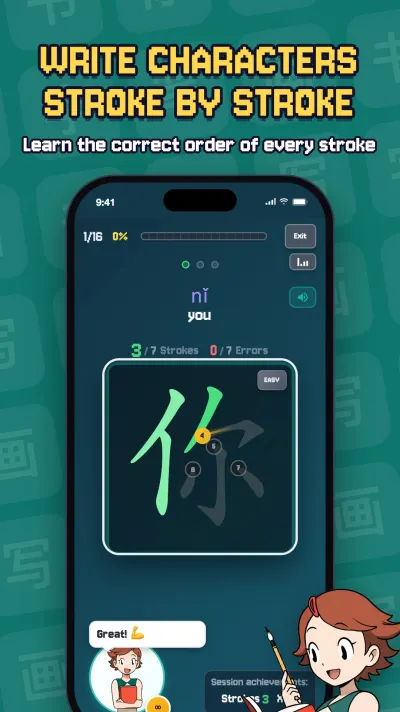
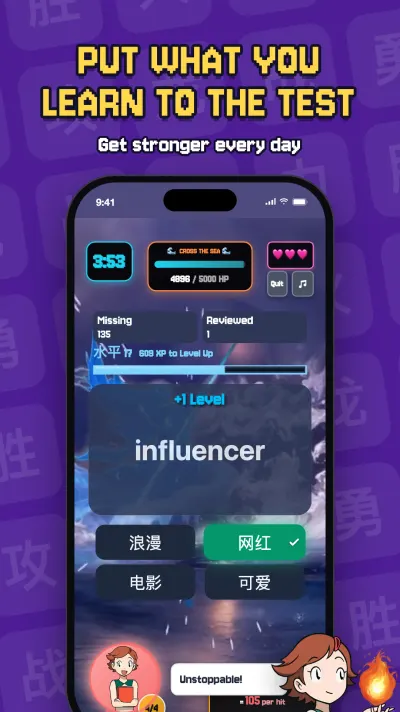
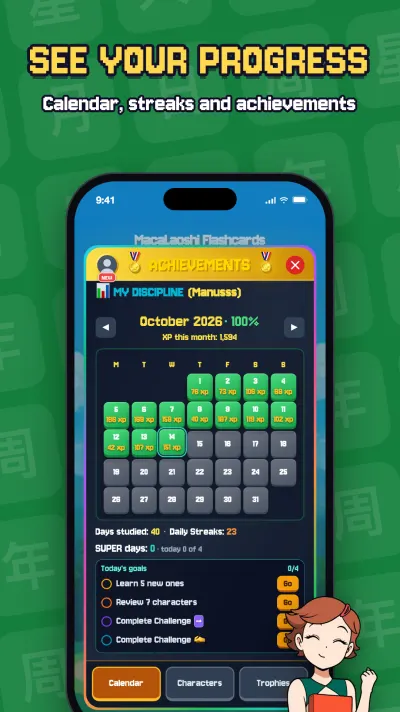
Improve your Chinese with Macalaoshi Flashcards
Maca Laoshi's app for learning characters, with audio, pinyin and stroke-by-stroke writing.
- 1,300+words and characters
- HSK 1–4by level
- Freeto start



Learn with our songs
We made them for Macalaoshi. Singing along is a fun way to practice pronunciation and review vocabulary.

The Lighthouse of My Heart 我心里灯塔

Study With You 跟你一起学
Frequently asked questions
How do you ask for the bill in Chinese?
Say 买单 (mǎidān): for example, 服务员,买单! (fúwùyuán, mǎidān!). 结账 (jiézhàng) also means paying the bill and is a bit more formal.
What is the emergency number in China?
110 for the police, 120 for an ambulance and 119 for the fire department; for traffic accidents, 122. They work nationwide and the call is free.
How do you say “I don't understand” in Chinese?
我听不懂 (wǒ tīng bu dǒng), which means “I don't understand what I'm hearing”. If you'd like someone to write it down, ask 可以写下来吗? (kěyǐ xiě xiàlai ma?).
Can I use my foreign card in China?
Since 2023, Alipay and WeChat Pay let you link credit or debit cards issued outside China and pay with your phone by scanning QR codes. Check the terms in the app before you travel.
How do I tell a taxi driver where I'm going?
Show the address written in Chinese characters and say 师傅,去这个地方 (shīfu, qù zhège dìfang): “this place, please”. To get them to stop, say 在这儿停一下 (zài zhèr tíng yīxià).
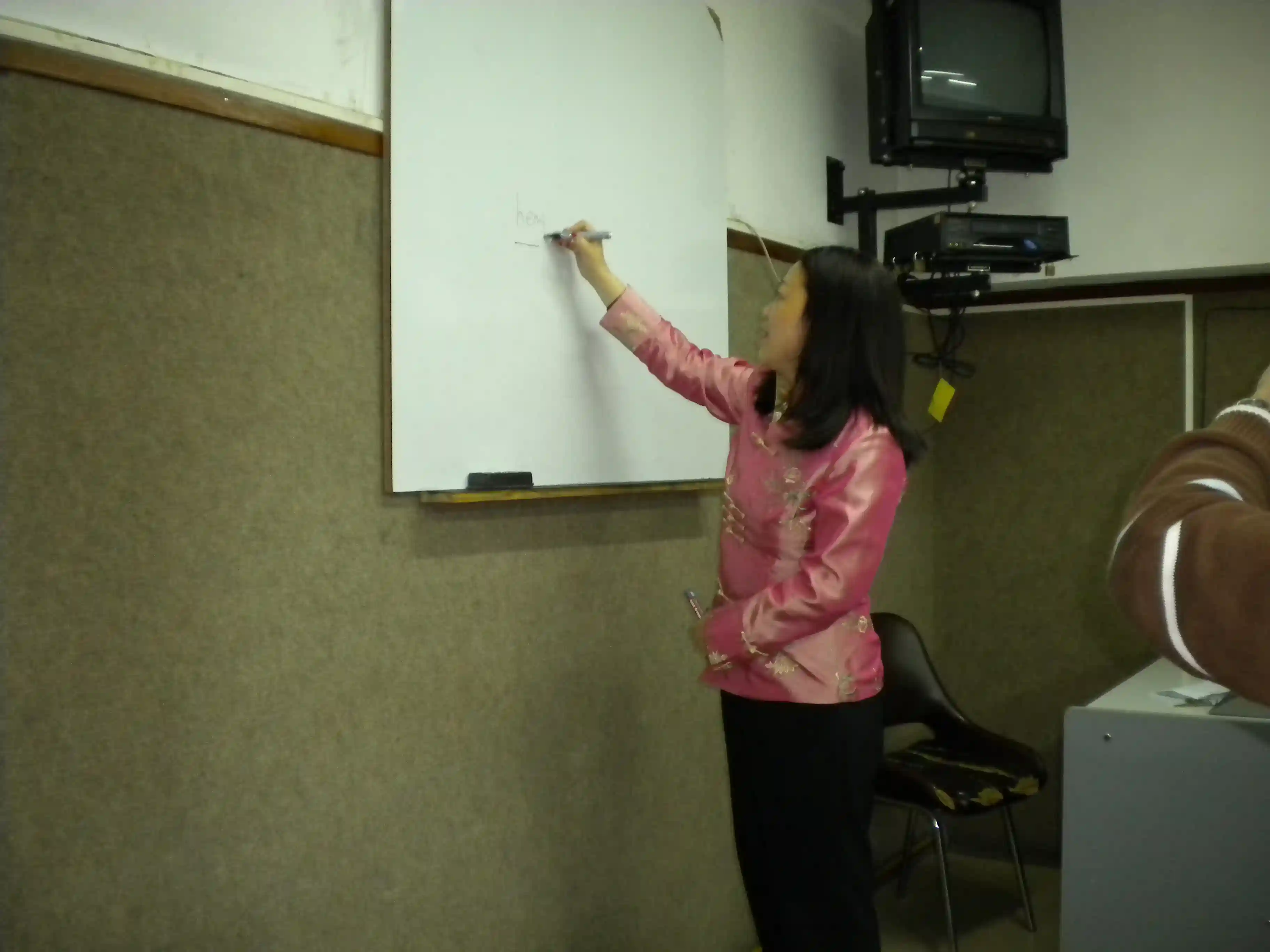
Maca Laoshi, born in Beijing, has taught Mandarin Chinese for more than 22 years and has had over 1,500 students. Together with her son Manu Shi, who has more than 93,000 subscribers on YouTube, she created Macalaoshi, an app that challenges you to push yourself one character at a time. Few Chinese teachers can show both: their own app and a channel like that.
Sources
- CC-CEDICT dictionary (MDBG, October 3, 2026 version): pinyin and meaning of every word in the tables.
- Beijing Municipal Government: nationwide, free emergency numbers (110, 119, 120 and 122).
- Alipay+: Alipay's International Version and cards issued outside the Chinese mainland.
- Alipay (June 21, 2023): travelers can link their Mastercard to Alipay.
- Tencent (July 20, 2023): WeChat Pay accepts international cards.
- Tencent (June 18, 2025): WeChat Pay guide for visitors, signing up with an international phone number.
- People's Daily, overseas edition (2015): 师傅 as a respectful form of address for people with a trade, with the example of a driver.
- Pinyin: how q, x, zh and c sound compared with English.
- Wikipedia's Mandarin pronunciation key: English approximations for q, x and zh.
- Voiceless alveolo-palatal fricative: how the pinyin x is articulated, with the blade of the tongue raised toward the palate.
- Standard Chinese phonology: tone changes of 不 and 一.
- Wiktionary: 买单 means paying the restaurant bill; 结账 is its more formal synonym.
This guide in other languages: Español · Português · Français · Deutsch · Italiano · 日本語 · 한국어