Guides › Chinese numbers
Chinese numbers 1–100 (plus hand signs)
Maca Laoshi, Mandarin Chinese teacher
Updated October 20, 2026 · 7 min read
From 1 to 10: 一 yī, 二 èr, 三 sān, 四 sì, 五 wǔ, 六 liù, 七 qī, 八 bā, 九 jiǔ and 十 shí. With those ten, you can build everything up to 99: 十一 is 11 (ten one), 二十 is 20 (two tens) and 九十九 is 99. 100 is 一百 yìbǎi. Before a measure word, 2 is 两 liǎng, and large numbers are grouped by ten thousands.
0 to 10
| Number | Character | Pinyin |
|---|---|---|
| 0 | 零 | líng |
| 1 | 一 | yī |
| 2 | 二 | èr |
| 3 | 三 | sān |
| 4 | 四 | sì |
| 5 | 五 | wǔ |
| 6 | 六 | liù |
| 7 | 七 | qī |
| 8 | 八 | bā |
| 9 | 九 | jiǔ |
| 10 | 十 | shí |
11 to 99
They're built with simple addition and multiplication, with no new words:
| Number | Chinese | Pinyin | Literally |
|---|---|---|---|
| 11 | 十一 | shíyī | ten one |
| 15 | 十五 | shíwǔ | ten five |
| 20 | 二十 | èrshí | two tens |
| 21 | 二十一 | èrshíyī | two tens one |
| 33 | 三十三 | sānshísān | three tens three |
| 99 | 九十九 | jiǔshíjiǔ | nine tens nine |
Chinese numbers 1 to 100: full chart
Here are all the numbers from 1 to 100 with their characters and pinyin. Apart from the 百 in 100, the same ten characters come back again and again:
| 1 一 yī | 2 二 èr | 3 三 sān | 4 四 sì | 5 五 wǔ |
| 6 六 liù | 7 七 qī | 8 八 bā | 9 九 jiǔ | 10 十 shí |
| 11 十一 shíyī | 12 十二 shí'èr | 13 十三 shísān | 14 十四 shísì | 15 十五 shíwǔ |
| 16 十六 shíliù | 17 十七 shíqī | 18 十八 shíbā | 19 十九 shíjiǔ | 20 二十 èrshí |
| 21 二十一 èrshíyī | 22 二十二 èrshí'èr | 23 二十三 èrshísān | 24 二十四 èrshísì | 25 二十五 èrshíwǔ |
| 26 二十六 èrshíliù | 27 二十七 èrshíqī | 28 二十八 èrshíbā | 29 二十九 èrshíjiǔ | 30 三十 sānshí |
| 31 三十一 sānshíyī | 32 三十二 sānshí'èr | 33 三十三 sānshísān | 34 三十四 sānshísì | 35 三十五 sānshíwǔ |
| 36 三十六 sānshíliù | 37 三十七 sānshíqī | 38 三十八 sānshíbā | 39 三十九 sānshíjiǔ | 40 四十 sìshí |
| 41 四十一 sìshíyī | 42 四十二 sìshí'èr | 43 四十三 sìshísān | 44 四十四 sìshísì | 45 四十五 sìshíwǔ |
| 46 四十六 sìshíliù | 47 四十七 sìshíqī | 48 四十八 sìshíbā | 49 四十九 sìshíjiǔ | 50 五十 wǔshí |
| 51 五十一 wǔshíyī | 52 五十二 wǔshí'èr | 53 五十三 wǔshísān | 54 五十四 wǔshísì | 55 五十五 wǔshíwǔ |
| 56 五十六 wǔshíliù | 57 五十七 wǔshíqī | 58 五十八 wǔshíbā | 59 五十九 wǔshíjiǔ | 60 六十 liùshí |
| 61 六十一 liùshíyī | 62 六十二 liùshí'èr | 63 六十三 liùshísān | 64 六十四 liùshísì | 65 六十五 liùshíwǔ |
| 66 六十六 liùshíliù | 67 六十七 liùshíqī | 68 六十八 liùshíbā | 69 六十九 liùshíjiǔ | 70 七十 qīshí |
| 71 七十一 qīshíyī | 72 七十二 qīshí'èr | 73 七十三 qīshísān | 74 七十四 qīshísì | 75 七十五 qīshíwǔ |
| 76 七十六 qīshíliù | 77 七十七 qīshíqī | 78 七十八 qīshíbā | 79 七十九 qīshíjiǔ | 80 八十 bāshí |
| 81 八十一 bāshíyī | 82 八十二 bāshí'èr | 83 八十三 bāshísān | 84 八十四 bāshísì | 85 八十五 bāshíwǔ |
| 86 八十六 bāshíliù | 87 八十七 bāshíqī | 88 八十八 bāshíbā | 89 八十九 bāshíjiǔ | 90 九十 jiǔshí |
| 91 九十一 jiǔshíyī | 92 九十二 jiǔshí'èr | 93 九十三 jiǔshísān | 94 九十四 jiǔshísì | 95 九十五 jiǔshíwǔ |
| 96 九十六 jiǔshíliù | 97 九十七 jiǔshíqī | 98 九十八 jiǔshíbā | 99 九十九 jiǔshíjiǔ | 100 一百 yìbǎi |
 Test your Chinese
Improve your Chinese with our app, Macalaoshi Flashcards: 1,300+ words and characters to practice like this.
See the app100 and up
| Number | Chinese | Pinyin |
|---|---|---|
| 100 | 一百 | yìbǎi |
| 101 | 一百零一 | yìbǎi líng yī |
| 110 | 一百一十 | yìbǎi yīshí |
| 1,000 | 一千 | yìqiān |
| 10,000 | 一万 | yíwàn |
| 100,000 | 十万 | shíwàn |
| 1,000,000 | 一百万 | yìbǎiwàn |
| 100,000,000 | 一亿 | yíyì |
- 零 marks the gaps: 101 has no tens, so it's 一百零一. In everyday speech, 一百一 means 110, never 101.
- Numbers are grouped by ten thousands: in English, we count in thousands and millions; in Chinese, in 万 (10,000) and 亿 (100 million). A million is “one hundred ten-thousands”, 一百万. For example, 13,579 is 一万三千五百七十九.
- The tone of 一 changes: yì before 百 and 千, yí before 万 and 亿. We explain why in the 4 Mandarin tones.
Is two 二 or 两?
| Use | When | Example |
|---|---|---|
| 两 liǎng | Before a measure word, to say “two of something” | 两个人 two people · 两本书 two books |
| 二 èr | When counting, before 十, at the end of a number and in ordinals | 二十 20 · 十二 12 · 第二 second |
| 两 or 二 | Before 百, 千, 万 and 亿, both work; in speech you'll hear 两 a lot | 两百 or 二百 200 · 两千 2,000 · 两万 20,000 |
Years, phone numbers and prices
- Years are read digit by digit, with 年 at the end: 2026 is 二〇二六年 (èr líng èr liù nián). In years, zero is written 〇.
- In phone and room numbers, 1 is often said 幺 yāo, so it isn't confused with 7 (qī).
How to say prices
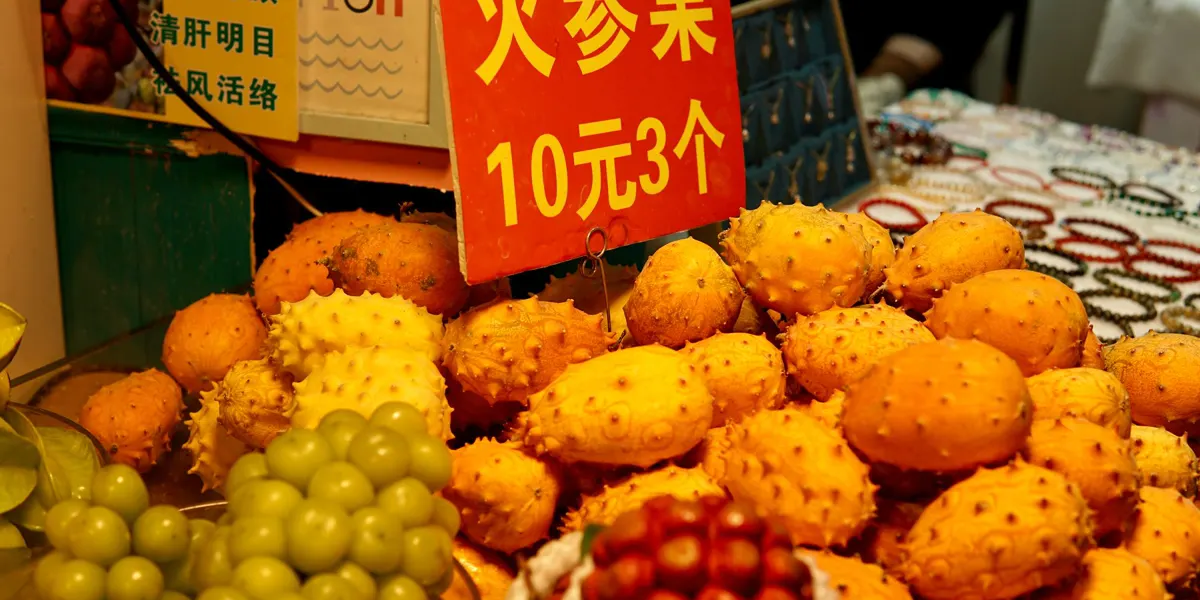
To ask a price: 多少钱? (duōshao qián?), how much is it? China's currency is the yuan, which is divided into 10 jiao, and each jiao into 10 fen. Spoken and written Chinese use different words:
| Value | Written | Spoken |
|---|---|---|
| 1 yuan | 元 yuán | 块 kuài |
| 0.1 yuan | 角 jiǎo | 毛 máo |
| 0.01 yuan | 分 fēn | 分 fēn (its coins are rarely used today) |
- In speech, the last unit can be dropped: ¥8.74 is said 八块七毛四 (bā kuài qī máo sì); in writing, 八元七角四分.
- With 2, use 两, because 块 works as a measure word: 两块钱 (liǎng kuài qián), 2 yuan.
Counting on one hand
In China, you count from 1 to 10 on one hand. These are the most common gestures in mainland China, though they vary by region: in Fujian or Taiwan, for example, 7 and 8 are made differently.
| Number | Gesture |
|---|---|
| 1 | Index finger raised; the other fingers closed. |
| 2 | Index and middle fingers raised, like a V. |
| 3 | Middle, ring and little fingers raised, with the tips of the thumb and index finger touching in a circle. Some people raise the index, middle and ring fingers instead, with the thumb holding down the little finger. |
| 4 | All four fingers raised, with the thumb folded across the palm. |
| 5 | An open hand, with all five fingers spread. |
| 6 | Thumb and little finger extended; the other three fingers closed. |
| 7 | The fingertips of all five fingers pressed together, or just those of the thumb, index and middle fingers, pointing up. |
| 8 | Thumb and index finger extended in an L; the other fingers closed. |
| 9 | Index finger bent like a hook; the other fingers closed. |
| 10 | A closed fist, or the middle finger crossed over the index finger. With two hands, the two index fingers crossed make a cross, like the character 十. |
On China's southern coast, 7 is the index finger pointing down with the thumb out, like a drawn 7, and 8 is the thumb, index and middle fingers extended.
Lucky and unlucky numbers
- 4: 四 (sì) sounds almost like 死 (sǐ, to die); only the tone is different. That's why many buildings have no fourth floor.
- 8: 八 (bā) rhymes with 发 (fā), as in 发财 (to get rich), and is associated with prosperity. The Beijing Olympics opened on August 8, 2008 (8/8/08) at 8:00 pm.
Numbers with a double meaning
In text messages and online, some numbers are used for how they sound. These are the ones you'll see most:
| Number | Read as | Means | Why |
|---|---|---|---|
| 520 | wǔ èr líng | I love you | Sounds a bit like 我爱你 (wǒ ài nǐ). On May 20 (5/20), many couples register their marriage. |
| 1314 | yī sān yī sì | for a lifetime | Sounds a bit like 一生一世 (yìshēng yíshì). Together, 5201314 means “I love you for a lifetime.” |
| 88 | bā bā | bye | Sounds like 拜拜 (bàibai), from the English “bye-bye.” |
| 666 | liù liù liù | awesome!, nice skills! | 六 (liù) sounds like 溜 (liù), “smooth, skillful.” It's used a lot to praise someone in comments and chats. |
| 250 | 二百五 èrbǎiwǔ | idiot | It's an insult: 二百五 is said of someone very foolish. Only this form works; 两百五 or 二百五十 are just the number. |
The numbers on checks
In legal documents and financial receipts, numbers are written with different characters that are harder to alter: 壹 贰 叁 肆 伍 陆 柒 捌 玖 拾 (1 to 10). For example, 3,504 yuan is written 叁仟伍佰零肆圆. You don't need to learn them at first, but it's worth being able to recognize them if you're going to live in China.
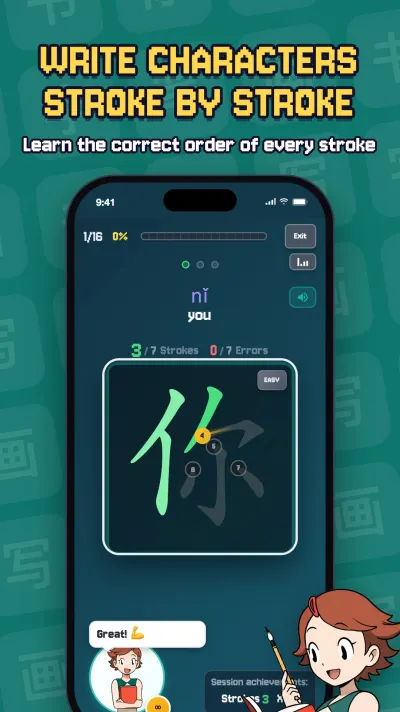
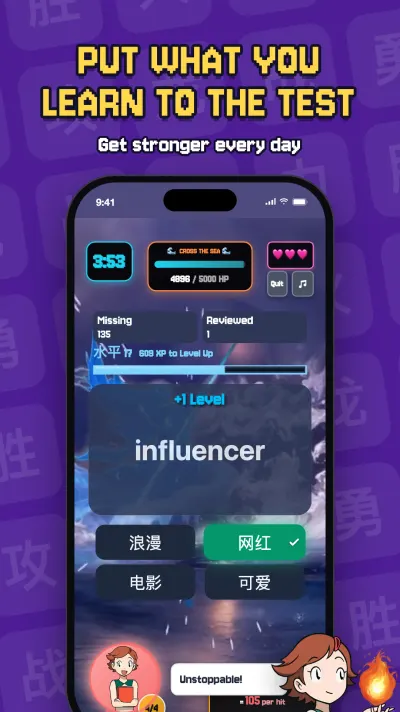
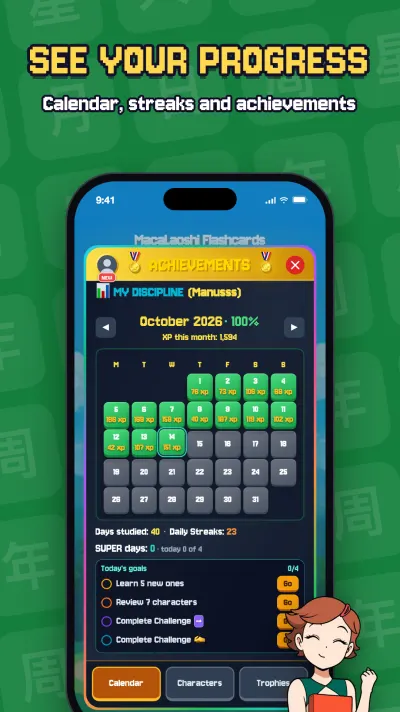
Improve your Chinese with Macalaoshi Flashcards
Maca Laoshi's app for learning characters, with audio, pinyin and stroke-by-stroke writing.
- 1,300+words and characters
- HSK 1–4by level
- Freeto start



Learn with our songs
We made them for Macalaoshi. Singing along is a fun way to practice pronunciation and review vocabulary.

The Lighthouse of My Heart 我心里灯塔

Study With You 跟你一起学
Frequently asked questions
How do you say 100 in Chinese?
一百, yìbǎi: literally “one hundred” (you can't drop the 一). The 一 is in the fourth tone because of its tone change before 百.
When do you use 两 and when 二?
两 (liǎng) goes before a measure word: 两个人, two people. 二 (èr) is used when counting, before 十 (二十, 20), at the end of a number (十二, 12) and in ordinals (第二, second). Before 百, 千, 万 and 亿 both work, and in speech you'll hear 两 a lot: 两百, 两千, 两万.
How do you say years in Chinese?
Digit by digit, with 年 at the end: 2026 is 二〇二六年 (èr líng èr liù nián).
Why is 4 unlucky in China?
Because 四 (sì, four) sounds almost the same as 死 (sǐ, to die): only the tone is different. That's why many buildings skip the fourth floor.
How do you count on your hand in China?
From 1 to 5, you show that number of fingers. From 6 to 10, there are one-handed gestures of their own, such as thumb and pinky for 6, but they vary by region.
What does 520 mean in Chinese?
“I love you.” 520 is read wǔ èr líng, which sounds a bit like 我爱你 (wǒ ài nǐ). That's why many couples register their marriage on May 20, and 5201314 means “I love you for a lifetime.”
Maca Laoshi, born in Beijing, has taught Mandarin Chinese for more than 22 years and has had over 1,500 students. Together with her son Manu Shi, who has more than 93,000 subscribers on YouTube, she created Macalaoshi, an app that challenges you to push yourself one character at a time. Few Chinese teachers can show both: their own app and a channel like that.
Sources
- Official pinyin orthography rules (GB/T 16159-2012): how numbers are written.
- Chinese national standard on the use of numbers in publications (GB/T 15835-2011): 零, 〇 and financial numerals.
- Li Jinhua and Chen Xinwei (2022), on Zhu Dexi: the use of 二 and 两.
- People's Daily (2013): number gestures vary by region.
- China Daily (2013): the numbers 4 and 8 in Chinese culture.
- Beijing 2008 Organizing Committee: the opening ceremony began at 8:00 pm on August 8, 2008.
- Chinese numerals: how they're formed, 幺 in phone numbers, and hand gestures.
- Chinese Grammar Wiki (AllSet Learning): 二 vs. 两; 两百 (二百 also works), 两千 and 两块钱.
- Renminbi: the yuan (元) is divided into 10 jiao (角) and each jiao into 10 fen (分); in speech, 块 and 毛 are used (八块七毛四).
- Chinese number gestures from 1 to 10 and their regional variants.
- Chinese numerology: 520 (我爱你), 1314 (一生一世) and 二百五 as an insult.
- China Daily (2026): many couples register their marriage on May 20 because “520” sounds like “I love you.”
- Wiktionary: 88, “bye-bye”, from 拜拜.
- Wiktionary: 666, “awesome!”, from 溜 (liù).
This guide in other languages: Español · Português · Français · Deutsch · Italiano · 日本語 · 한국어