Guides › What to see in China
What to see in China: the 10 must-see places for a first visit
Maca Laoshi, Mandarin Chinese teacher
Updated October 27, 2026 · 10 min read
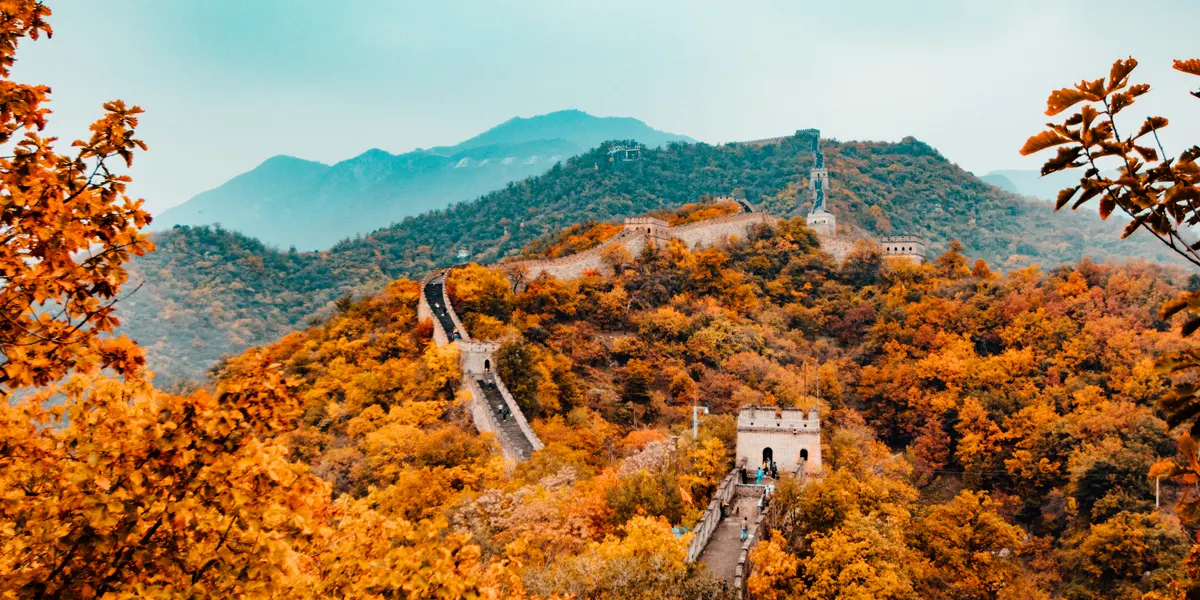
For a first visit to China, these ten places sum up the essentials: the Great Wall and the Forbidden City in Beijing, the Terracotta Army in Xi'an, the Bund in Shanghai, Zhangjiajie, Guilin, the pandas of Chengdu, West Lake, the gardens of Suzhou and Huangshan. A route of about 12 days links them by high-speed train and one flight, and spring and autumn are the best seasons. This guide covers mainland China.
The 10 places at a glance
The stars are Macalaoshi's own rating, our editorial opinion: they are not user reviews or scores from other sites. They depend on how unique the place is, how easy it is to reach and how much you enjoy it on a first visit. The days are our own suggestion.
| Place | Where | Rating | Best for | Days | Best time |
|---|---|---|---|---|---|
| The Great Wall (长城, Chángchéng) | Beijing and Hebei | ★★★★★ | History, hiking | 1 day | Spring and autumn |
| The Forbidden City (故宫, Gùgōng) | Beijing | ★★★★★ | History | Half a day | Spring and autumn |
| The Terracotta Army (兵马俑, Bīngmǎyǒng) | Xi'an (Shaanxi) | ★★★★★ | History | Half a day | Spring and autumn |
| The Bund in Shanghai (外滩, Wàitān) | Shanghai | ★★★★☆ | City, photos | One evening | Spring and autumn |
| Zhangjiajie (张家界, Zhāngjiājiè) | Hunan | ★★★★★ | Nature | 2 to 3 days | Spring and autumn |
| Guilin and the Li River (桂林 / 漓江, Guìlín / Lí Jiāng) | Guangxi | ★★★★★ | Scenery, boat trips | 2 to 3 days | Autumn |
| The Chengdu pandas (大熊猫, dàxióngmāo) | Chengdu (Sichuan) | ★★★★☆ | Animals, families | One morning | Spring and autumn |
| West Lake in Hangzhou (西湖, Xīhú) | Hangzhou (Zhejiang) | ★★★★☆ | Strolling, tea | 1 day | Spring and autumn |
| The gardens of Suzhou (苏州园林, Sūzhōu yuánlín) | Suzhou (Jiangsu) | ★★★★☆ | Gardens, calm | Half a day | Spring and autumn |
| Huangshan, the Yellow Mountains (黄山, Huángshān) | Anhui | ★★★★☆ | Mountain, sunrises | 2 days | All year, depending on the weather |
The 10 places, one by one
Each place is deliberately short; to go deeper, see historic China, natural landscapes, Chinese cities and business travel. Bookings, opening hours and entry requirements for the country change: confirm them with the official channel or your embassy before you travel.
1. The Great Wall (长城, Chángchéng)
Why go. It has been a UNESCO World Heritage Site since 1987, and the best-known sections date from the Ming dynasty (1368-1644). Near Beijing: Badaling, the easiest to reach and the most crowded; Mutianyu, restored, with a cable car, about 85 km from the centre; and Jinshanling, in Hebei, the least visited.
Macalaoshi rating: ★★★★★ — the symbol of China; Mutianyu makes a first visit easy.
Practical tip. Mutianyu requires a real-name booking on its official website and accepts a passport. More sections in historic China.
What to eat there: 北京烤鸭 (Běijīng kǎoyā, Peking duck); 炸酱面 (zhájiàngmiàn, noodles with fermented soybean sauce)
Words you will see there
| Chinese | Pinyin | Meaning |
|---|---|---|
| 长城 | Chángchéng | Great Wall |
| 缆车 | lǎnchē | cable car |
| 滑道 | huádào | toboggan |
2. The Forbidden City (故宫, Gùgōng)
Why go. The palace of 24 Ming and Qing emperors, completed in 1420: it covers more than a million square metres and has been a UNESCO site since 1987. Today it is the Palace Museum.
Macalaoshi rating: ★★★★★ — China's great imperial palace, worth half a day.
Practical tip. There are no same-day tickets: book under your real name in the official WeChat mini program (sales open seven days ahead, at 20:00). A passport is accepted; enter with the original. Closed on Mondays except public holidays.
What to eat there: 涮羊肉 (shuàn yángròu, instant-boiled mutton hotpot); 糖葫芦 (tánghúlu, candied fruit on a stick)
Words you will see there
| Chinese | Pinyin | Meaning |
|---|---|---|
| 故宫 | Gùgōng | Forbidden City |
| 午门 | Wǔmén | Meridian Gate |
| 预约 | yùyuē | booking |
3. The Terracotta Army (兵马俑, Bīngmǎyǒng)
Why go. Farmers digging a well found it on 29 March 1974. Estimates speak of more than 8,000 soldiers, 130 chariots and 520 horses. It has been a UNESCO site since 1987. In Xi'an you can also walk its Ming city wall, 13.74 km long.
Macalaoshi rating: ★★★★★ — unique in the world; the Xi'an wall rounds it off.
Practical tip. Buy tickets only through the museum's official channels (its website and WeChat accounts). Foreigners show their passport when buying and entering.
What to eat there: 肉夹馍 (ròujiāmó, stuffed bun with meat); 凉皮 (liángpí, cold noodles with chili and vinegar)
Words you will see there
| Chinese | Pinyin | Meaning |
|---|---|---|
| 兵马俑 | bīngmǎyǒng | Terracotta Army |
| 城墙 | chéngqiáng | city wall |
| 博物馆 | bówùguǎn | museum |
4. The Bund in Shanghai (外滩, Wàitān)
Why go. A promenade of about 1.6 km along the Huangpu River, facing Pudong, with about 52 historic buildings in varied styles. The buildings of the Bund and Pudong are lit up every evening.
Macalaoshi rating: ★★★★☆ — the easiest postcard of Shanghai, though not a unique historic site.
Practical tip. Go at dusk and stay until the lights come on.
What to eat there: 小笼包 (xiǎolóngbāo, steamed soup dumplings); 生煎包 (shēngjiānbāo, pan-fried pork buns); 红烧肉 (hóngshāoròu, braised pork belly)
Words you will see there
| Chinese | Pinyin | Meaning |
|---|---|---|
| 外滩 | Wàitān | the Bund |
| 黄浦江 | Huángpǔ Jiāng | Huangpu River |
| 地铁 | dìtiě | metro |
5. Zhangjiajie (张家界, Zhāngjiājiè)
Why go. Wulingyuan has been a UNESCO site since 1992: more than 3,000 sandstone pillars, many over 200 m. One mountain was renamed "Avatar Hallelujah Mountain" in 2010, and the Bailong Elevator climbs 326 m.
Macalaoshi rating: ★★★★★ — a landscape like no other, made accessible by cable cars.
Practical tip. According to Wikivoyage, the ticket is valid for four days and is registered under your real name; the elevator is paid separately. Ticket validity can change, so check it when you buy. More in natural landscapes.
What to eat there: 三下锅 (sānxiàguō, spicy meat stew, the local dish); 莓茶 (méichá, berry tea)
Words you will see there
| Chinese | Pinyin | Meaning |
|---|---|---|
| 张家界 | Zhāngjiājiè | Zhangjiajie |
| 索道 | suǒdào | cable car |
| 电梯 | diàntī | elevator |
6. Guilin and the Li River (桂林 / 漓江, Guìlín / Lí Jiāng)
Why go. The Li River (164 km) runs through karst towers of 30 to 80 m, and its view is on the 20 yuan note. Part of the Guilin karst is a UNESCO site (2014 extension). The cruise to Yangshuo takes 3.5 to 4 hours.
Macalaoshi rating: ★★★★★ — a postcard landscape, easy to enjoy by boat.
Practical tip. Book the boat in advance; in the dry winter season the first stretch may be done by road.
What to eat there: 桂林米粉 (Guìlín mǐfěn, Guilin rice noodles); 啤酒鱼 (píjiǔyú, beer fish, famous in Yangshuo)
Words you will see there
| Chinese | Pinyin | Meaning |
|---|---|---|
| 漓江 | Lí Jiāng | Li River |
| 游船 | yóuchuán | tour boat |
| 码头 | mǎtou | pier |
7. The Chengdu pandas (成都大熊猫繁育研究基地, Chéngdū Dàxióngmāo Fányù Yánjiū Jīdì)
Why go. The Chengdu base was founded in 1987 with six pandas rescued from the wild and now breeds giant and red pandas. It is a breeding and research centre, not a nature park.
Macalaoshi rating: ★★★★☆ — a morning everyone loves.
Practical tip. Everyone books online under their name, up to 14 days ahead; with a passport you use a separate lane. Go early, when the pandas are most active.
What to eat there: 麻婆豆腐 (mápó dòufu, spicy tofu); 担担面 (dàndàn miàn, noodles in a spicy, numbing sauce)
Words you will see there
| Chinese | Pinyin | Meaning |
|---|---|---|
| 熊猫 | xióngmāo | panda |
| 大熊猫 | dàxióngmāo | giant panda |
| 预约 | yùyuē | booking |
8. West Lake in Hangzhou (西湖, Xīhú)
Why go. A UNESCO site since 2011. About 6.4 km², two historic causeways and the Leifeng Pagoda (975, rebuilt in 2002). Since 2002 you can stroll most of its shore for free.
Macalaoshi rating: ★★★★☆ — a serene walk, under an hour from Shanghai.
Practical tip. From Shanghai Hongqiao the high-speed train takes about 50 minutes. The Longjing tea fields are best seen at harvest: from March to shortly after 1 May.
What to eat there: 西湖醋鱼 (Xīhú cùyú, fish in vinegar sauce); 东坡肉 (Dōngpō ròu, braised pork belly); 龙井虾仁 (lóngjǐng xiārén, shrimp with Longjing tea)
Words you will see there
| Chinese | Pinyin | Meaning |
|---|---|---|
| 西湖 | Xīhú | West Lake |
| 龙井茶 | lóngjǐngchá | Longjing tea |
| 桥 | qiáo | bridge |
9. The gardens of Suzhou (苏州园林, Sūzhōu yuánlín)
Why go. Nine classical gardens are UNESCO sites (four since 1997 and five more since 2000) and span almost a thousand years of garden art, from the Northern Song to the late Qing.
Macalaoshi rating: ★★★★☆ — calm and detail, for those who enjoy subtlety.
Practical tip. From Shanghai it is under half an hour by train. Summer is humid and can reach 40 °C: better in spring or autumn.
What to eat there: 松鼠鳜鱼 (sōngshǔ guìyú, sweet-and-sour "squirrel" fish, the emblem of Suzhou)
Words you will see there
| Chinese | Pinyin | Meaning |
|---|---|---|
| 苏州 | Sūzhōu | Suzhou |
| 园林 | yuánlín | classical garden |
| 拙政园 | Zhuōzhèng Yuán | Humble Administrator's Garden |
10. Huangshan, the Yellow Mountains (黄山, Huángshān)
Why go. A UNESCO site since 1990 for its natural and cultural value. Lotus Peak is 1,864 m high. People speak of "four wonders": strange pines, odd rocks, a sea of clouds and hot springs.
Macalaoshi rating: ★★★★☆ — spectacular, though it depends on the weather and the booking.
Practical tip. Entry is under your real name and by time slot, on the official platform. The summit is in cloud over 200 days a year; the sea of clouds often shows after rain or snow.
What to eat there: 臭鳜鱼 (chòu guìyú, fermented mandarin fish); 毛豆腐 (máodòufu, "hairy" tofu)
Words you will see there
| Chinese | Pinyin | Meaning |
|---|---|---|
| 黄山 | Huángshān | Huangshan |
| 云海 | yúnhǎi | sea of clouds |
| 索道 | suǒdào | cable car |
 Test your Chinese
Improve your Chinese with our app, Macalaoshi Flashcards: 1,300+ words and characters to practice like this.
See the appSuggested route for a first visit
About 12 days, by high-speed train and one flight. It is our own suggestion and timetables change: check them before buying.
| Days | City | What to see | How to get there |
|---|---|---|---|
| 1 to 4 | Beijing | Forbidden City, Great Wall (Mutianyu), Temple of Heaven and Summer Palace (historic China) | Flight |
| 5 and 6 | Xi'an | Terracotta Army and city wall | Train: 4 h 11 min at best (2022) |
| 7 to 9 | Chengdu | Pandas; Leshan or Mount Emei as a day trip | Train: from 3 h 27 min to 4 h 7 min (2017) |
| 10 to 12 | Shanghai | The Bund; Suzhou (under 30 min by train) and Hangzhou (about 50 min) | Flight; then train |
Train tickets. Register beforehand with your passport in the official 12306 app or website; if automatic verification fails, manual review takes three to five working days.
Best time to travel
In general, spring and autumn: in summer the monsoon brings most of the rain to much of the country, and winter is cold and dry in the north. For Beijing, Visit Beijing recommends late March to May and September to mid-October.
Avoid the long holidays or book far ahead: since 2025, Chinese New Year is 4 official days off, plus 1 and 2 May and 1 to 3 October, and they are often joined to weekends.
Traveller's vocabulary
Many of these words are from HSK 1 and HSK 2, the levels Macalaoshi trains: learn them before the trip. To speak, there are 50 Chinese phrases for travel, greetings and numbers.
| Chinese | Pinyin | Meaning | HSK level |
|---|---|---|---|
| 门票 | ménpiào | entrance ticket | HSK 2 |
| 售票处 | shòupiàochù | ticket office | — |
| 入口 | rùkǒu | entrance | — |
| 出口 | chūkǒu | exit | — |
| 预约 | yùyuē | booking; to book | — |
| 护照 | hùzhào | passport | — |
| 景区 | jǐngqū | scenic area | — |
| 地铁 | dìtiě | metro | HSK 2 |
| 高铁 | gāotiě | high-speed train | — |
| 车站 | chēzhàn | station (train or bus) | HSK 2 |
| 机场 | jīchǎng | airport | HSK 2 |
| 洗手间 | xǐshǒujiān | toilet, restroom | HSK 2 |
| 酒店 | jiǔdiàn | hotel | HSK 2 |
| 便宜 | piányi | cheap | HSK 1 |
| 贵 | guì | expensive | HSK 1 |
Pinyin is given as in the dictionary. In speech, when two third tones come together, the first becomes a second tone: 洗手间 sounds xíshǒujiān.
How Macalaoshi does it
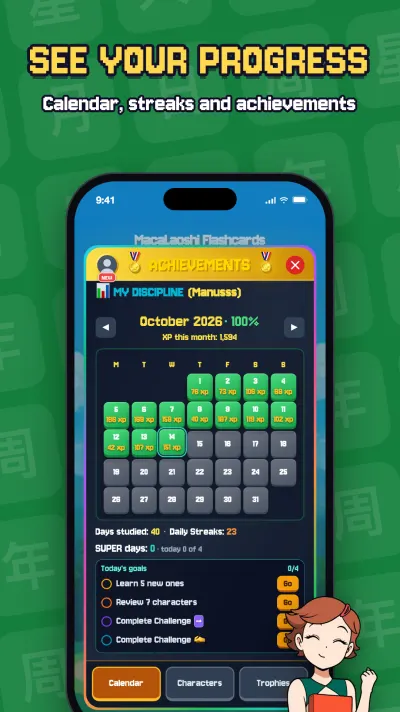
Recognizing these characters before you travel saves you on signs, menus and at stations. In Macalaoshi you learn them through challenges to save the world from the Empress with the power of Chinese characters: more than 1300 words and characters from HSK 1 to 4, bosses, stroke-by-stroke writing in the correct order and story mode with Lili. Every character you get right goes up a level and what you miss comes back for you to review. Getting started is free; to lock in the vocabulary, see how to memorize vocabulary.
Improve your Chinese with Macalaoshi Flashcards
Maca Laoshi's app for learning characters, with audio, pinyin and stroke-by-stroke writing.
- 1,300+words and characters
- HSK 1–4by level
- Freeto start





Learn with our songs
We made them for Macalaoshi. Singing along is a fun way to practice pronunciation and review vocabulary.

The Lighthouse of My Heart 我心里灯塔

Study With You 跟你一起学
Frequently asked questions
How many days do you need to see the main sights of China?
About 12 days is enough to link Beijing, Xi'an, Chengdu and Shanghai without rushing. With less time, pick two or three cities and leave the rest for another trip.
What is the best time to travel to China?
In general, spring and autumn: the summer monsoon brings most of the rain to much of the country. For Beijing, the best months are late March to May and September to mid-October. Avoid, or book far ahead for, Chinese New Year, 1 May and 1 October.
Do you have to book the Forbidden City in advance?
Yes. The Palace Museum does not sell same-day tickets: you book under your real name through its official WeChat mini program, with sales opening seven days ahead. Foreign visitors can use a passport. It is closed on Mondays except public holidays.
Can a foreigner buy high-speed train tickets?
Yes. You can create an account in the official 12306 app or website with your passport and verify your identity; if automatic verification fails, you upload photos and the review can take three to five working days. It is best to do this before you travel.
Does this guide include Taiwan, Hong Kong or Macao?
No. It covers mainland China, where the simplified characters taught by Macalaoshi are used.
Which Chinese words are worth knowing before the trip?
The ones on signs and in stations: 门票 (ménpiào, entrance ticket), 入口 (rùkǒu, entrance), 出口 (chūkǒu, exit), 地铁 (dìtiě, metro) and 预约 (yùyuē, booking). They are in the vocabulary table of this guide.
Maca Laoshi, born in Beijing, has taught Mandarin Chinese for more than 22 years and has had over 1,500 students. Together with her son Manu Shi, who has more than 93,000 subscribers on YouTube, she created Macalaoshi, an app that challenges you to push yourself one character at a time. Few Chinese teachers can show both: their own app and a channel like that.
Sources
- Beijing government (19 July 2024): Palace Museum, Monday closing, advance tickets, 1420, 24 emperors and UNESCO 1987.
- Beijing government (29 June 2023): real-name booking, sales at 20:00 seven days ahead and passports accepted.
- Mutianyu, official notice (18 July 2023): real-name booking, passport, cable car and toboggan.
- Visit Beijing (2015): Badaling, the most accessible and crowded; Mutianyu, restored and about 85 km away; Jinshanling, the least visited.
- Wikipedia: UNESCO inscription years of China's sites (UNESCO's own website blocks automated access).
- Wikipedia: Great Wall, UNESCO 1987 and Ming-dynasty sections (1368-1644).
- Wikipedia: Terracotta Army, discovery on 29 March 1974 and the 2007 estimates.
- China Daily (7 May 2026): Terracotta Army museum; foreigners show their passport when buying and entering.
- Wikipedia: Xi'an city walls, begun in 1370, 13.74 km long.
- Wikipedia: the Bund, 1.6 km, about 52 historic buildings and night lighting.
- Wikipedia: Wulingyuan, UNESCO 1992, more than 3,000 pillars and the 326 m Bailong Elevator.
- Wikivoyage: Zhangjiajie, four-day ticket with name registration and best seasons.
- Wikipedia: Li River, 164 km, karst towers and the 20 yuan note.
- Wikipedia: South China Karst, UNESCO 2007 and the 2014 extension with Guilin.
- Wikivoyage: the Guilin-Yangshuo cruise of 3.5 to 4 hours and boats in the dry season.
- Wikipedia: Chengdu panda base, founded in 1987 with six pandas.
- Chuanguan News (30 January 2026): the base's notice on online booking, 14 days ahead and a passport lane.
- Wikipedia: West Lake, UNESCO 2011, causeways, Leifeng Pagoda and free access since 2002.
- Wikivoyage: Hangzhou, train from Shanghai Hongqiao in about 50 minutes and the tea harvest.
- Wikipedia: Classical Gardens of Suzhou, UNESCO 1997 and 2000, nine gardens.
- China Daily (10 June 2026): squirrel fish, the signature dish of Suzhou cuisine.
- Wikivoyage: Suzhou, train from Shanghai in under half an hour and summer climate.
- Chinese Wikipedia: Huangshan, the "four wonders", Lotus Peak at 1,864 m and UNESCO 1990.
- Wikivoyage: Huangshan, summit in cloud over 200 days a year, sea of clouds and cable cars.
- Guangming Daily (6 October 2026): real-name, timed entry on Huangshan's official platform.
- National Railway Administration (20 June 2022): Beijing West to Xi'an North in 4 h 11 min at best.
- China Daily (6 December 2017): Xi'an to Chengdu in 4 h 7 min when the line opened and a 3 h 27 min target.
- Beijing Foreign Affairs Office (15 January 2024): registration and passport verification in the 12306 app.
- State Council (12 November 2024): public holidays in force since 2025 (Chinese New Year, 1 and 2 May, 1 to 3 October).
- Visit Beijing (2013): best months for Beijing, peak season and Chinese New Year.
- Wikipedia: climate of China, the summer monsoon and dry winters in the north.
- CC-CEDICT (MDBG, version of 3 October 2026): pinyin and meaning of the words in the tables.
- CLEC (China): the new HSK syllabus (November 2025), basis of the HSK 1 and 2 lists behind the level column.
This guide in other languages: Español · Português · Français · Deutsch · Italiano · 日本語 · 한국어