Guides › 30-day plan to learn Chinese
How to learn Chinese from scratch on your own: a 30-day plan
Maca Laoshi, Mandarin Chinese teacher
Updated October 20, 2026 · 11 min read
To start Chinese on your own, set aside 20 minutes a day for 30 days. Week one: pinyin and tones. Week two: greetings, numbers and your first characters. Week three: phrases to introduce yourself. Week four: numbers up to 100, dates, ordering, asking prices and telling the time. By the end, you can say hello, introduce yourself, count to 100, ask for simple things and recognize the plan's 90 characters, which are all listed below.
Before you start
- 20 minutes a day, at the same time every day if you can: 5 minutes of review, 10 of new material and 5 of listening and repeating out loud.
- A notebook for writing characters by hand.
- Audio with good pronunciation: videos from a teacher, an app with audio or a dictionary with recordings. At first, repeating out loud matters more than reading.
- A way to review: paper flashcards, Anki or an app that keeps track for you.
Week 1 (days 1 to 7): pinyin and tones
Pinyin is the way Chinese is written with the Latin alphabet. It isn't read the way English is (q, x and c, for example, don't sound like they do in English), so this week is the foundation for everything else. Repeat every sound out loud.
| Day | What you study | Practice with |
|---|---|---|
| 1 | The 4 tones and the neutral tone | 妈 麻 马 骂 (mā má mǎ mà) |
| 2 | Vowels: a, o, e, i, u, ü | 八 bā, 饿 è, 女 nǚ |
| 3 | b, p, m, f, d, t, n, l (with and without a puff of air) | 爸 bà, 怕 pà, 大 dà, 他 tā |
| 4 | g, k, h, j, q, x | 好 hǎo, 七 qī, 谢 xiè |
| 5 | zh, ch, sh, r, z, c, s | 中 zhōng, 吃 chī, 是 shì |
| 6 | Finals: ai, ei, ao, ou, an, en, ang, eng, ong | 爱 ài, 高 gāo, 忙 máng |
| 7 | Review with two-syllable words and your first tone change | 你好 nǐ hǎo (said ní hǎo), 谢谢 xièxie |
Watch out with 你好: it's written nǐ hǎo but pronounced ní hǎo. When two third tones come together, the first one is said as a second tone. The same happens with 很好 (hěn hǎo, very good), which sounds like hén hǎo.
If the tones give you trouble, we have a full guide to the 4 Mandarin tones, with this and the other tone changes.
Week 2 (days 8 to 14): greetings, numbers and your first characters
Starting this week, you add about 5 new characters a day, with their pinyin and meaning, and write each one by hand three or four times.
| Days | What you study | Examples |
|---|---|---|
| 8–9 | Greetings and courtesy | 你好 hello · 谢谢 thank you · 再见 goodbye · 对不起 sorry · 没关系 that's OK |
| 10–11 | Numbers 1 to 10 | 一 二 三 四 五 六 七 八 九 十 |
| 12 | Basic strokes and stroke order | 中 人 口 大 小, plus 十, which you already know |
| 13 | Pronouns | 我 I · 你 you · 他 he · 她 she · 我们 we |
| 14 | Review of the week | Write the characters you learned from memory |
The 30 characters of week 2
| Days | New characters (pinyin, meaning) |
|---|---|
| 8–9 | 你 nǐ, you · 好 hǎo, good, well · 谢 xiè, to thank · 再 zài, again · 见 jiàn, to see · 对 duì, correct · 不 bù, not, no · 起 qǐ, to rise · 没 méi, not have, there isn't · 关 guān, to close · 系 xì, tie, link |
| 10–11 | 一 yī, one · 二 èr, two · 三 sān, three · 四 sì, four · 五 wǔ, five · 六 liù, six · 七 qī, seven · 八 bā, eight · 九 jiǔ, nine · 十 shí, ten |
| 12 | 中 zhōng, middle, center · 人 rén, person · 口 kǒu, mouth · 大 dà, big · 小 xiǎo, small |
| 13 | 我 wǒ, I, me · 他 tā, he · 她 tā, she · 们 men, plural for people (我们, we) |
The pinyin in these lists is each character's tone on its own. Inside a word, some of them change: 不 becomes bú before a fourth tone (不是 bú shì), 一 changes depending on the syllable after it, and in 谢谢 or 对不起 the last syllable takes the neutral tone.
For numbers, and to write correctly from the start, see Chinese numbers and stroke order.
 Test your Chinese
Improve your Chinese with our app, Macalaoshi Flashcards: 1,300+ words and characters to practice like this.
See the appWeek 3 (days 15 to 21): introducing yourself
With just a few structures, you can already have your first conversation:
| Chinese | Pinyin | English |
|---|---|---|
| 你叫什么名字? | Nǐ jiào shénme míngzi? | What's your name? |
| 我叫安娜。 | Wǒ jiào Ānnà. | My name is Anna. |
| 你是哪国人? | Nǐ shì nǎ guó rén? | What country are you from? |
| 我是美国人。 | Wǒ shì Měiguó rén. | I'm American. |
| 你呢? | Nǐ ne? | And you? |
| 你是老师吗? | Nǐ shì lǎoshī ma? | Are you a teacher? |
| 我也是学生。 | Wǒ yě shì xuésheng. | I'm a student too. |
| 我学中文。 | Wǒ xué Zhōngwén. | I'm learning Chinese. |
| 你家有几口人? | Nǐ jiā yǒu jǐ kǒu rén? | How many people are there in your family? |
| 我喜欢喝咖啡。 | Wǒ xǐhuan hē kāfēi. | I like drinking coffee. |
Notice 吗 (ma): you add it to the end of a statement to turn it into a yes-or-no question. Practice each sentence by swapping in your own words: your name, your country, what you like.
The 30 characters of week 3
| Days | New characters (pinyin, meaning) |
|---|---|
| 15–16 Your name | 叫 jiào, to be called · 什 shén and 么 me, together 什么, what · 名 míng, name · 字 zì, character, written word · 的 de, possessive particle (“'s”) · 是 shì, to be · 老 lǎo, old · 师 shī, master (老师, teacher) · 吗 ma, question particle |
| 17–18 Where you're from | 哪 nǎ, which · 国 guó, country · 呢 ne, particle (“and…?”) · 也 yě, also, too · 学 xué, to study · 生 shēng, to be born (学生, student) · 文 wén, writing, language (中文, Chinese) · 在 zài, at, in · 住 zhù, to live · 家 jiā, home, family |
| 19–20 Your family and what you like | 有 yǒu, to have, there is · 几 jǐ, how many · 喜 xǐ and 欢 huān, together 喜欢, to like · 喝 hē, to drink · 咖 kā and 啡 fēi, together 咖啡, coffee · 茶 chá, tea · 水 shuǐ, water · 吃 chī, to eat |
| 21 | Review: read the week's sentences out loud and write their characters from memory |
Week 4 (days 22 to 30): numbers, dates, shopping and time
| Days | What you study | Examples |
|---|---|---|
| 22–23 | Numbers up to 100, age and dates | 九十九 99 · 一百 100 · 我二十五岁。 I'm 25. · 十月二十号 October 20 · 星期一 Monday · 星期天 Sunday |
| 24–25 | Ordering and asking prices | 这个多少钱? How much is this? · 十块。 Ten yuan. · 我要两个。 I'd like two. · 那个很贵。 That one is very expensive. · 我买这个。 I'll buy this one. |
| 26–27 | Days, times of day and telling the time | 今天 today · 明天 tomorrow · 昨天 yesterday · 上午 in the morning · 下午 in the afternoon · 晚上 in the evening · 现在几点? What time is it? · 三点十分 ten past three |
| 28–29 | General review | Read all of the month's sentences out loud and review the 90 characters |
| 30 | Final test | Introduce yourself out loud in one minute (name, country, age and what you like), record yourself and listen back. Then write 20 characters from the list from memory, picked at random. |
The 30 characters of week 4
| Days | New characters (pinyin, meaning) |
|---|---|
| 22–23 | 百 bǎi, hundred · 两 liǎng, two (for counting things: 两个) · 岁 suì, years of age · 年 nián, year · 月 yuè, month, moon · 日 rì, day, sun · 号 hào, number, day of the month · 星 xīng, star · 期 qī, period (星期, week) · 天 tiān, day, sky |
| 24–25 | 这 zhè, this · 那 nà, that · 个 gè, the most common measure word · 多 duō, many, much · 少 shǎo, few, little (多少, how much) · 钱 qián, money · 块 kuài, piece; in everyday speech, yuan · 要 yào, to want · 买 mǎi, to buy · 贵 guì, expensive |
| 26–27 | 今 jīn, current (今天, today) · 明 míng, bright, next (明天, tomorrow) · 昨 zuó, yesterday · 上 shàng, up, before · 下 xià, down, after · 午 wǔ, noon · 晚 wǎn, evening, late · 现 xiàn, now (现在, now) · 点 diǎn, dot, o'clock · 分 fēn, minute |
How to tell if it worked
On day 30, go through this list. If you can do most of it, the month worked:
- Read any pinyin syllable out loud, with its tone.
- Say hello, thank someone, apologize and say goodbye.
- Say your name, where you're from, your age and what you like, and ask someone else the same.
- Count to 100, say the date and the time, and ask how much something costs.
- Recognize the plan's 90 characters and write most of them from memory.
Mistakes that make people quit
- Trying to go too fast. Five characters a day with review are worth more than twenty you forget.
- Skipping the tones. Fixing them later is much harder.
- Only reading. If you don't repeat out loud, you won't be able to speak.
- Breaking your streak for more than a day. Missing one day is fine; miss three in a row and it's easy to give up.
After day 30
Keep the same pace and aim for the new HSK 1 vocabulary: 300 words that let you handle simple everyday situations. 88 of this plan's 90 characters already appear in those words (only 咖 and 啡 are missing). If you want to know what to expect in the longer run, see how long it takes to learn Chinese.
Improve your Chinese with Macalaoshi Flashcards
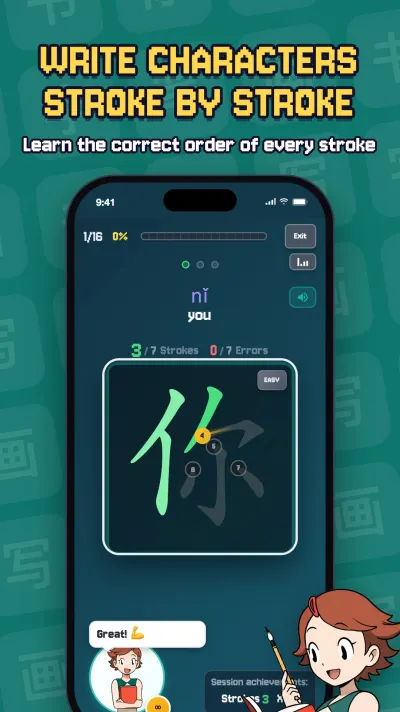
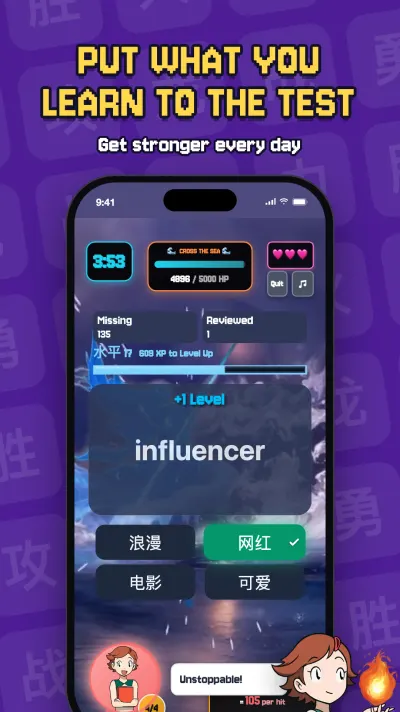
Maca Laoshi's app for learning characters, with audio, pinyin and stroke-by-stroke writing.
- 1,300+words and characters
- HSK 1–4by level
- Freeto start



Learn with our songs
We made them for Macalaoshi. Singing along is a fun way to practice pronunciation and review vocabulary.

The Lighthouse of My Heart 我心里灯塔

Study With You 跟你一起学
Frequently asked questions
Can you learn Chinese on your own?
To get started, yes: with a plan, good-quality audio and consistency, you can learn pinyin, tones, basic phrases and your first characters. To hold fluent conversations, at some point you need to practice with people.
How much time a day should I study Chinese?
Between 15 and 30 minutes a day is enough to make progress. A little every day gets you further than a lot once a week.
What should I learn first, speaking or writing?
Pronunciation first: pinyin and tones during the first week. Characters come in from the second week, little by little and always with their pinyin.
What if I skip a day of the plan?
Pick it up where you left off, without trying to do two days in one. What matters is never missing more than one day in a row.
How many characters can I learn in 30 days?
With this plan, 90: about five new ones a day from the second week on, with daily review. The full list, with pinyin and meaning, is in this guide. 88 of those 90 characters appear in the words of the new HSK 1, so it's a good base for moving on to that vocabulary.
Why is 你好 pronounced “ní hǎo”?
Because when two third tones come together, the first one is pronounced as a second tone. In pinyin it's still written nǐ hǎo.
Maca Laoshi, born in Beijing, has taught Mandarin Chinese for more than 22 years and has had over 1,500 students. Together with her son Manu Shi, who has more than 93,000 subscribers on YouTube, she created Macalaoshi, an app that challenges you to push yourself one character at a time. Few Chinese teachers can show both: their own app and a channel like that.
Sources
- Ministry of Education of China: Scheme for the Chinese Phonetic Alphabet (汉语拼音方案, 1958).
- Standard Chinese phonology: third-tone sandhi and the tone changes of 一 and 不.
- CC-CEDICT (MDBG): the dictionary we used to check the pinyin of the 90 characters.
- Center for Language Education and Cooperation (CLEC, China): syllabus of the new HSK exam (November 2025).
This guide in other languages: Español · Português · Français · Deutsch · Italiano · 日本語 · 한국어