Guides › Learn Chinese with TV shows
How to learn Chinese with TV shows and movies: a 5-step method
Maca Laoshi, Mandarin Chinese teacher
Updated October 20, 2026 · 9 min read

To learn Chinese with TV shows, pick an everyday drama that matches your level, watch each episode first with English subtitles, then go back to two or three scenes with Chinese subtitles. Write down whole sentences, repeat them out loud with the actors and review them over the next few days. One scene worked through in depth teaches you more than a whole season watched straight through.
Step 1: choose carefully what to watch
The show should be a little harder than what you already know, not much harder. If you're a beginner, look for stories about school, college or family set in the present. You'll find lists in dramas for beginners, dramas for intermediate and advanced learners and movies by difficulty. Leave historical dramas for later (we explain why in Chinese historical dramas).
Step 2: use subtitles in three stages
| Stage | Subtitles | What for |
|---|---|---|
| 1 | English | Following the story and enjoying it. |
| 2 | Chinese | Linking what you hear to the characters and writing down sentences. |
| 3 | None | Really training your ear. |
Dramas from mainland China almost always come with Chinese subtitles, often burned into the picture. They help a lot in stage 2, but don't stop there: if you're always reading, you're not training your ear.
How to turn on subtitles on each platform
- Netflix: while the episode is playing, open “Audio & Subtitles” and choose Chinese, if the title has it. If it isn't listed, add it in your profile's audio and subtitle language settings and save. At netflix.com/browse/subtitles you can browse titles by subtitle language.
- Viki: open the player settings (the gear icon) and choose the subtitle language. Subtitles are translated by a community of volunteers, so check which languages each show has.
- YouTube: in the player, tap “More” (the three dots), then “Captions”, and choose the language. If yours isn't there, tap “Auto-translate”: it's good enough to follow the story, but the translation has mistakes.
If the characters are already burned into the picture, you don't need to turn anything on: for stage 2, switch off the subtitles in your language and read the ones on screen.
 Test your Chinese
Improve your Chinese with our app, Macalaoshi Flashcards: 1,300+ words and characters to practice like this.
See the appStep 3: work on short scenes
Pick a one- or two-minute scene you like. Watch it several times until you understand every sentence. That's more useful than watching a whole episode and understanding half of it.
Which dictionary to use when you pause
- Pleco (iOS and Android): the basic version is free and recognizes characters you draw with your finger, so you can look one up even if you don't know how to read it.
- Google Translate: point your phone's camera at the screen, or use a screenshot, and it reads the subtitles and translates them. Use it to understand the sentence, then look up each word in a dictionary.
Step 4: repeat out loud (shadowing)
Pause after each sentence and repeat it, copying the actor: the rhythm, the intonation and the tones. Once you can do it, try speaking at the same time as the actor. That way, the pronunciation and set phrases stick without you even noticing.
Step 5: write down and review
- Write down whole sentences, not single words: 你吃饭了吗? (“Have you eaten?”) is useful exactly as it is.
- Five sentences per scene is enough. Any more and you'll forget them.
- Review them the next day and again a few days later. Spaced repetition is what makes memories stick; we explain it in how to memorize Chinese characters.
A sample week
| Day | What to do (20 minutes) |
|---|---|
| Monday | Watch an episode with English subtitles. |
| Tuesday | Pick a scene and watch it with Chinese subtitles. Write down five sentences. |
| Wednesday | Shadow the scene. |
| Thursday | Review the sentences and watch the scene without subtitles. |
| Friday | Another scene from the same episode. |
| Weekend | Watch the next episode just for fun. |
Common mistakes
- Choosing a show that's too hard and giving up after ten minutes.
- Always watching with English subtitles: it's entertaining, but you learn little.
- Writing down dozens of words you never review again.
- Watching without speaking: if you don't repeat out loud, your pronunciation won't improve.
Songs and podcasts work with the same method. You'll find recommendations in Chinese songs to learn Mandarin and podcasts and channels.
Improve your Chinese with Macalaoshi Flashcards
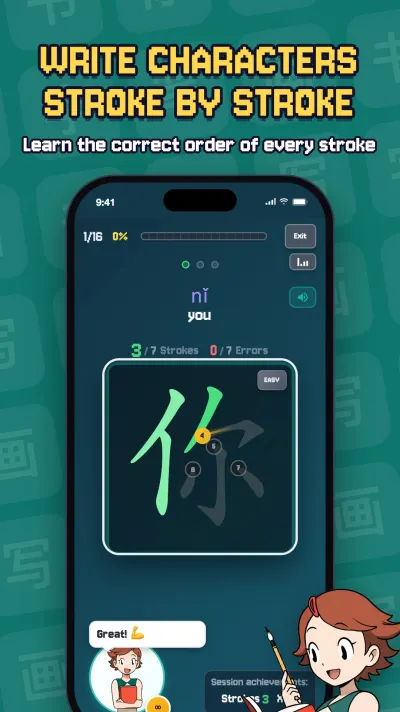
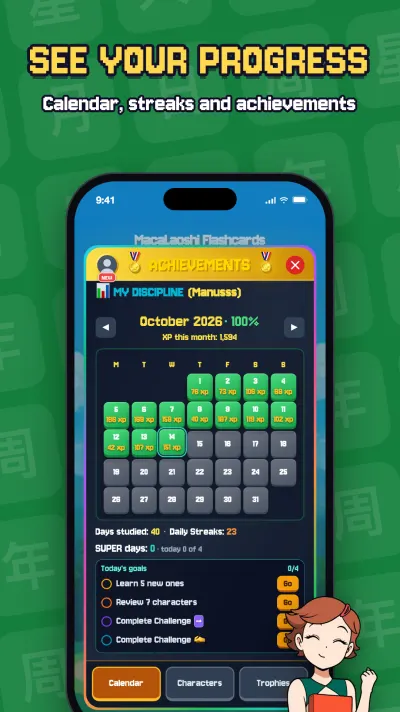
Maca Laoshi's app for learning characters, with audio, pinyin and stroke-by-stroke writing.
- 1,300+words and characters
- HSK 1–4by level
- Freeto start




Learn with our songs
We made them for Macalaoshi. Singing along is a fun way to practice pronunciation and review vocabulary.

The Lighthouse of My Heart 我心里灯塔

Study With You 跟你一起学
Frequently asked questions
Can you learn Chinese by watching TV shows?
TV shows train your ear, give you real phrases and keep you motivated. They work best combined with vocabulary and character study and conversation practice.
Which subtitles should I use to learn Chinese?
First English subtitles, to follow the story; then the same scenes with Chinese subtitles; finally, no subtitles. That's how you go from understanding to really listening.
How do I turn on Chinese subtitles on Netflix?
While the episode is playing, open “Audio & Subtitles” and choose Chinese, if the title has it. If it isn't listed, add it in your profile's audio and subtitle language settings and save.
How much TV should I watch a day?
15 to 20 minutes spent working through one scene in depth teaches you more than two episodes watched straight through. The key is repetition and review.
What is shadowing?
It's repeating out loud what an actor says, right after them, copying the rhythm, intonation and tones. It's one of the best exercises for loosening up your pronunciation.
Which Chinese dramas are best for beginners?
Everyday dramas set in the present, like 致我们暖暖的小时光 (Put Your Head on My Shoulder). You'll find the full list in our guide to dramas for beginners.
Maca Laoshi, born in Beijing, has taught Mandarin Chinese for more than 22 years and has had over 1,500 students. Together with her son Manu Shi, who has more than 93,000 subscribers on YouTube, she created Macalaoshi, an app that challenges you to push yourself one character at a time. Few Chinese teachers can show both: their own app and a channel like that.
Sources
- Visit Beijing: why Chinese television has Chinese subtitles.
- Viki: “Put Your Head on My Shoulder”, with English subtitles.
- Netflix Help Center: how to choose the subtitle language (“Audio & Subtitles”).
- Netflix Help Center: why a subtitle language isn't showing and how to add it to your profile.
- Viki Help: how to turn on subtitles and choose the language.
- Rakuten Viki: subtitles are translated by a community of volunteers.
- YouTube Help: choosing the caption language and “Auto-translate”.
- Pleco: the basic version is free and includes handwriting recognition.
- Google Translate Help: translate text with your camera or from an image.
This guide in other languages: Español · Português · Français · Deutsch · Italiano · 日本語 · 한국어