Guides › I love you in Chinese
I Love You in Chinese: Love Phrases with Pinyin, Pet Names, 520 and 1314
Maca Laoshi ·
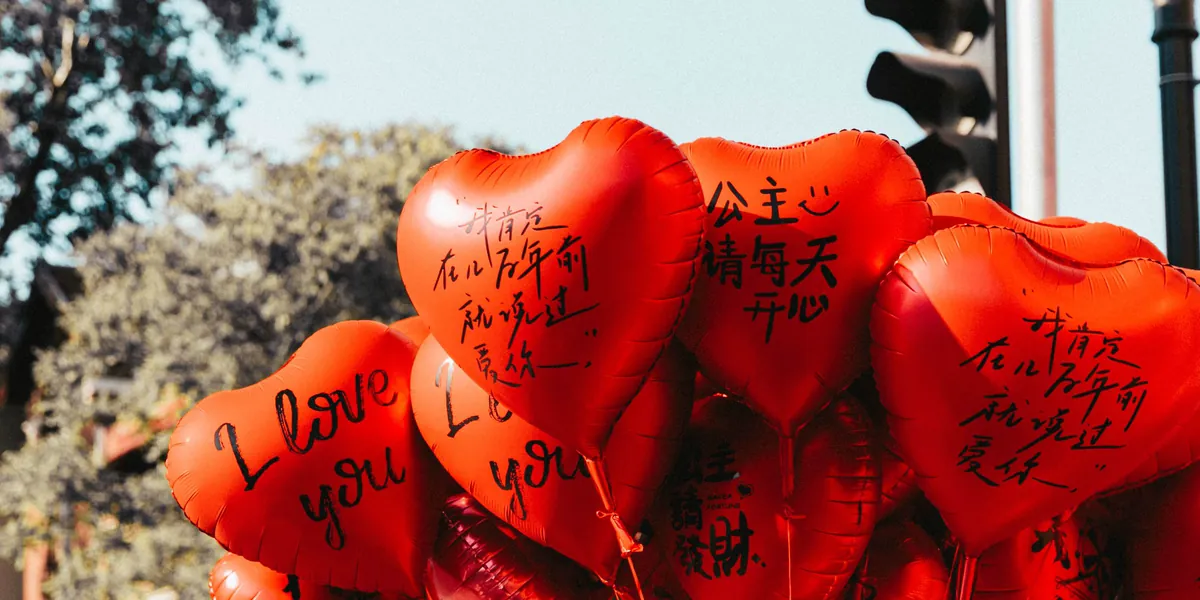
To say “I love you” in Chinese, say 我爱你 (wǒ ài nǐ). It is a weighty phrase, and several teaching sources note that people say it less often: to start, 我喜欢你 (wǒ xǐhuan nǐ), “I like you”, is the usual line, and 我爱你 comes once you are a couple. This guide gathers about 35 phrases with pinyin: confessing, missing someone, pet names, proposals and weddings, and the number codes for love, like 520 and 1314. For other everyday phrases, see Chinese greetings.
 Test your Chinese
Improve your Chinese with our app, Macalaoshi Flashcards: 1,300+ words and characters to practice like this.
See the appWhen to say 我爱你, and why it is said less
我爱你 carries more weight than the English “I love you”, according to StudyCLI. Several teaching sources agree that it is said less often, especially to parents. StudyCLI cites a 2013 study (Caldwell-Harris, Kronrod and Yang) in which university students in Beijing and Shanghai were more reluctant than American students to say “I love you”, particularly to their parents. In a relationship, the usual path is to start with 我喜欢你 and keep 我爱你 for later.
In families, affection is often shown through actions: asking 吃饭了吗 (chīfàn le ma, “have you eaten?”) or telling someone to dress warmly (多穿点), according to the same source. This is a tendency, not a rule: it varies with age, region and the person.
Confessing your feelings
From the softest line to the strongest, and how to ask someone to be together.
| Chinese | Pinyin | Meaning | When to use it |
|---|---|---|---|
| 我喜欢你 | wǒ xǐhuan nǐ | I like you | The usual way to confess your feelings at the start. |
| 我爱你 | wǒ ài nǐ | I love you | A weighty phrase; usually said once you are already a couple. |
| 我爱上你了 | wǒ àishàng nǐ le | I’ve fallen in love with you | When you realize you have fallen for someone. |
| 我对你一见钟情 | wǒ duì nǐ yījiànzhōngqíng | I fell for you at first sight | 一见钟情 is the idiom for love at first sight. |
| 做我女朋友吧 | zuò wǒ nǚpéngyou ba | will you be my girlfriend? | Literally “be my girlfriend”; said when asking a girl out. |
| 做我男朋友吧 | zuò wǒ nánpéngyou ba | will you be my boyfriend? | The same, said to a guy. |
| 我们在一起吧 | wǒmen zài yīqǐ ba | let’s be together | To propose starting a relationship. |
Missing someone and replying
What couples write to each other every day.
| Chinese | Pinyin | Meaning | When to use it |
|---|---|---|---|
| 我想你 | wǒ xiǎng nǐ | I miss you | When you are apart. 想 also means “to think” and “to want”. |
| 我好想你 | wǒ hǎo xiǎng nǐ | I miss you so much | 好 intensifies the feeling. |
| 我也爱你 | wǒ yě ài nǐ | I love you too | The answer to 我爱你. |
| 我也喜欢你 | wǒ yě xǐhuan nǐ | I like you too | The answer to a confession with 喜欢. |
| 我离不开你 | wǒ líbukāi nǐ | I can’t be without you | Dramatic; 离不开 means “can’t be separated from”. |
| 晚安,我爱你 | wǎn’ān, wǒ ài nǐ | good night, I love you | A good-night message to your partner. |
| 我会一直陪着你 | wǒ huì yīzhí péizhe nǐ | I’ll always be by your side | A promise of company; 陪 means “to accompany”. |
| 永远爱你 | yǒngyuǎn ài nǐ | I’ll love you forever | 永远 means “forever”. |
Numbers also work as codes: 530 (wǔ sān líng) is used for 我想你 (see the number table below).
Take a quick breakImprove your Chinese with our app, Macalaoshi Flashcards: 1,300+ words and characters to practice like this.
See the appProposals, anniversaries and weddings
For the proposal, the wedding and the special dates.
| Chinese | Pinyin | Meaning | When to use it |
|---|---|---|---|
| 嫁给我吧 | jià gěi wǒ ba | marry me | Said by a man: 嫁 is what a bride does when she marries. |
| 你愿意嫁给我吗? | nǐ yuànyì jià gěi wǒ ma | will you marry me? | The formal question of a proposal. |
| 你愿意和我结婚吗? | nǐ yuànyì hé wǒ jiéhūn ma | will you marry me? (neutral) | Works for anyone asking. |
| 我愿意 | wǒ yuànyì | I do; yes, I will | The answer to a proposal or at the ceremony. |
| 我爱你一辈子 | wǒ ài nǐ yībèizi | I’ll love you my whole life | Anniversaries and weddings; 一辈子 means “a whole lifetime”. |
| 白头偕老 | báitóuxiélǎo | to grow old together | A wish for newlyweds; an idiom. |
| 周年快乐 | zhōunián kuàilè | happy anniversary | For a couple’s or wedding anniversary. |
| 结婚纪念日快乐 | jiéhūn jìniànrì kuàilè | happy wedding anniversary | More specific, for married couples. |
| 情人节快乐 | Qíngrénjié kuàilè | happy Valentine’s Day | On 14 February. |
嫁 is what a bride does when she marries, so 你愿意嫁给我吗? is asked by a man; anyone can use the version with 结婚.
Pet names and what to call your partner
The most common words, from affectionate to neutral.
| Chinese | Pinyin | Meaning | When to use it |
|---|---|---|---|
| 亲爱的 | qīn’ài de | dear; darling | To address your partner; also used to open a letter. |
| 宝贝 | bǎobèi | treasure; darling; baby | A pet name; literally a treasured object. |
| 老公 | lǎogōng | husband (colloquial) | Said by the wife; also heard as a pet name between young couples. |
| 老婆 | lǎopo | wife (colloquial) | Said by the husband; also heard as a pet name between boyfriend and girlfriend. |
| 爱人 | àiren | spouse | This is the mainland China sense; elsewhere it can mean “lover”. |
| 男朋友 | nánpéngyou | boyfriend | 男 means “male” and 朋友 “friend”. |
| 女朋友 | nǚpéngyou | girlfriend | 女 means “female” and 朋友 “friend”. |
老公 and 老婆 are colloquial; dictionaries list them as “husband” and “wife”. When you want something more neutral, use 男朋友 and 女朋友.
Ready for the hardest one?Improve your Chinese with our app, Macalaoshi Flashcards: 1,300+ words and characters to practice like this.
See the app520, 1314 and the dates of love
In Chinese, love can also be written in numbers. 520 is read wǔ èr líng, which sounds close to 我爱你 (wǒ ài nǐ), and 1314 sounds like 一生一世 (yīshēng yīshì), “a whole lifetime”. The string 5201314 puts them together: “I love you for a lifetime”.
| Number | Pinyin | Sounds like | Meaning |
|---|---|---|---|
| 520 | wǔ èr líng | 我爱你 (wǒ ài nǐ) | I love you |
| 530 | wǔ sān líng | 我想你 (wǒ xiǎng nǐ) | I miss you |
| 1314 | yī sān yī sì | 一生一世 (yīshēng yīshì) | a whole lifetime |
| 5201314 | — | 520 + 1314 | I love you for a lifetime |
20 May (5月20日, “520”) is known as “Internet Valentine’s Day” (网络情人节): a date for confessing feelings and, according to Tatler, for registering marriages. Sometimes 521 is added as a variant of 520.
14 February is 情人节 (Qíngrénjié), the international Valentine’s Day. The traditional festival is 七夕 (Qīxī), the seventh day of the seventh month of the lunar calendar, often called Chinese Valentine’s Day. It recalls the legend of 牛郎织女 (Niúláng and Zhīnǚ), the cowherd and the weaver girl who meet only once a year.
爱 and 愛: what is the difference?
爱 (ài) is the simplified form, used in mainland China; 愛 is the traditional form, used in Taiwan and Hong Kong, and it contains 心 (xīn), “heart”. The simplified form does not have that component. It is the same word: the difference is in the writing, not the meaning. To see when each form is the right one, read traditional vs simplified Chinese.
Short phrases to memorize first
- Confessing: 我喜欢你.
- Replying: 我也爱你.
- Missing someone: 我想你.
- Promising: 永远爱你.
- Mind the tones: in 我喜欢你 two third tones come together, and in speech 我 sounds like a second tone (wó xǐhuan nǐ); review the tones and the pinyin chart.
How Macalaoshi does it
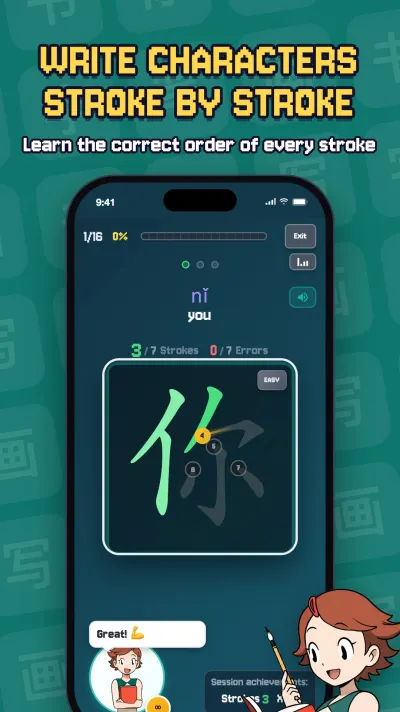
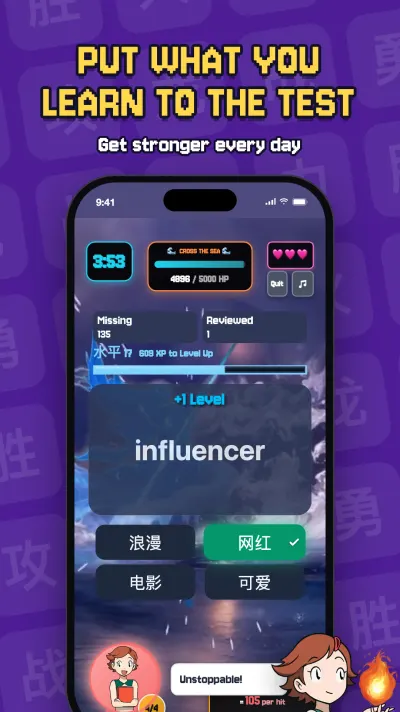
In Macalaoshi you collect characters from HSK 1 to 4 (more than 1300 words and characters in all), and every character you get right goes up a level; what you miss comes back for you to review. 爱, 喜欢, 想 and 朋友 are among the first words, and you can practice writing each one stroke by stroke, in the correct order, while you move through the story with Lili against the Empress. To go on with the people in your life, see family members in Chinese.
The pinyin follows the dictionary; in speech, 一 changes tone depending on the next syllable (for example, 一起 is said yìqǐ). Real pronunciation varies by region and speaker.
Improve your Chinese with Macalaoshi Flashcards
Maca Laoshi's app for learning characters, with audio, pinyin and stroke-by-stroke writing.
- 1,300+words and characters
- HSK 1–4by level
- Freeto start
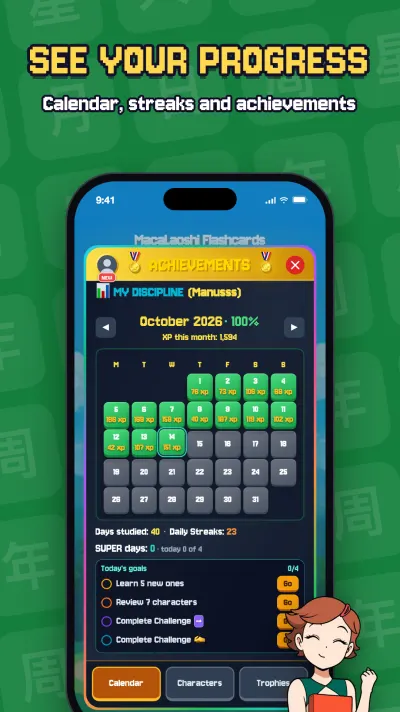


Learn with our songs
We made them for Macalaoshi. Singing along is a fun way to practice pronunciation and review vocabulary.

The Lighthouse of My Heart 我心里灯塔

Time to Shine 发光的时分
Frequently asked questions
How do you say “I love you” in Chinese?
我爱你 (wǒ ài nǐ). For something softer, 我喜欢你 (wǒ xǐhuan nǐ), “I like you”. To reply, 我也爱你, “I love you too”.
Why do Chinese speakers say “I love you” less?
Several teaching sources explain that 我爱你 carries more weight than the English “I love you” (according to StudyCLI) and that affection is shown through actions, especially in families. StudyCLI cites a 2013 study with students in Beijing and Shanghai. It is a tendency, not a rule: it varies by person, age and region.
What do 520 and 1314 mean?
520 (wǔ èr líng) sounds close to 我爱你, “I love you”. 1314 sounds like 一生一世 (yīshēng yīshì), “a whole lifetime”. Together, 5201314 is “I love you for a lifetime”. 20 May (5月20日) is known as Internet Valentine’s Day.
How do you propose in Chinese?
A man can say 嫁给我吧 (jià gěi wǒ ba), “marry me”, or 你愿意嫁给我吗?. The neutral version is 你愿意和我结婚吗? (nǐ yuànyì hé wǒ jiéhūn ma). The answer is 我愿意 (wǒ yuànyì).
What is Qixi (七夕)?
It is the seventh day of the seventh month of the lunar calendar, often called Chinese Valentine’s Day. It celebrates love and recalls the legend of the cowherd Niúláng and the weaver girl Zhīnǚ. 情人节 (14 February) is the international Valentine’s Day.
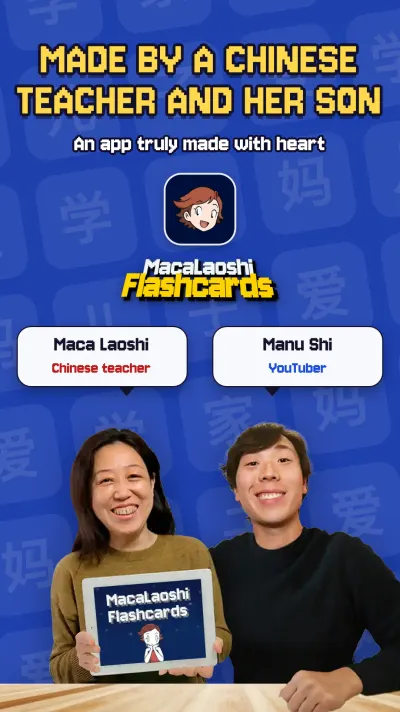
Maca Laoshi, born in Beijing, has taught Mandarin Chinese for more than 22 years and has had over 1,500 students. Together with her son Manu Shi, who has more than 93,000 subscribers on YouTube, she created Macalaoshi, an app that challenges you to push yourself one character at a time. Few Chinese teachers can show both: their own app and a channel like that.
Sources
- MDBG dictionary (based on CC-CEDICT): pinyin and meaning of the words in the tables, for example 爱上: “to fall in love with”, 一见钟情: “to fall in love at first sight (idiom)”, 爱人: “spouse (PRC)” and 白头偕老: “to live together until old age (idiom)”.
- StudyCLI: 我爱你 carries more weight than English “I love you” and is said less; 我喜欢你 is the usual way to confess; a 2013 study with students in Beijing and Shanghai; 530 as a code for 我想你; 嫁给我 is said by a man.
- Tatler Asia: 520 sounds like 我爱你; the string 520 (521) 1314 and its meaning “I love you, for a lifetime”; 20 May as “Internet Valentine’s Day”.
- Wikipedia: Qixi, seventh day of the seventh lunar month, called “Chinese Valentine’s Day”; the legend of the weaver girl and the cowherd.
- Wiktionary: 愛 is the traditional form of 爱 and is classified under the 心 (“heart”) radical.
- Wikipedia: 520 is read wǔ’èrlíng and represents 我爱你.
This guide in other languages: Español · Português · Français · Deutsch · Italiano · 日本語 · 한국어